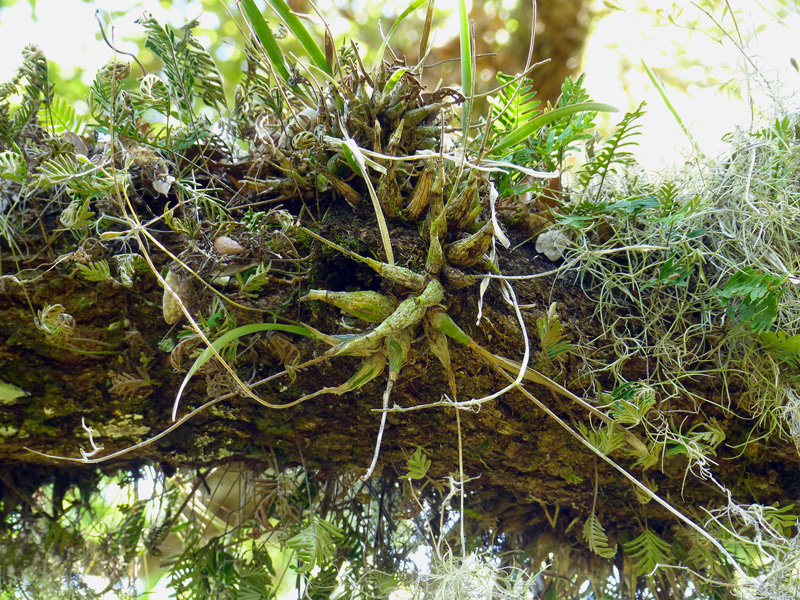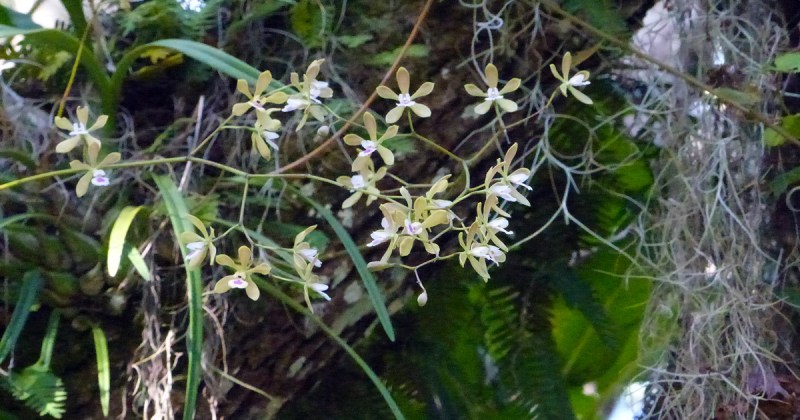

Florida butterfly orchid (Encyclia tampensis) is the most common orchid in Florida. It was first described by John Torrey in 1847 but likely was first collected earlier. Look carefully to see this orchid at the Oslo Riverfront Conservation Area (ORCA).
When not In flower, this orchid is easy to overlook. Its grass-like strappy leaves blend with other epiphytes including resurrection fern (Pleopeltis polypodioides), Spanish moss (Tillandisa usneodies), and southern needleleaf (Tillandsia setacea).
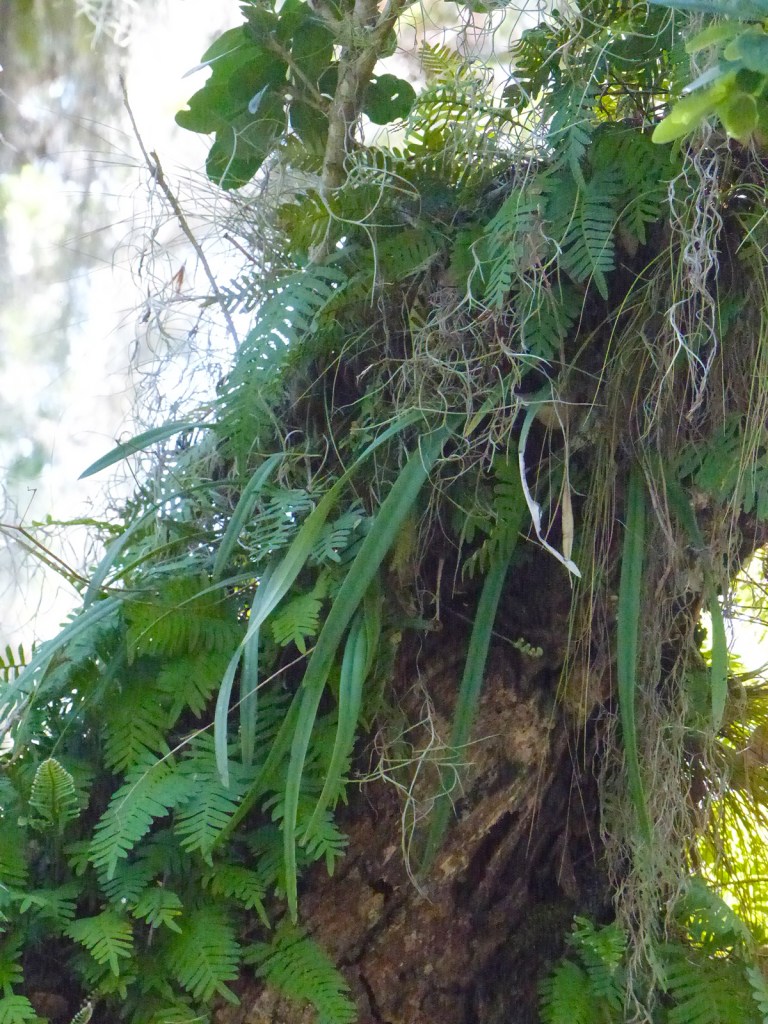
June is the peak time for flowering, and we were not disappointed when we visited south ORCA on June 11, 2023 looking for orchids …
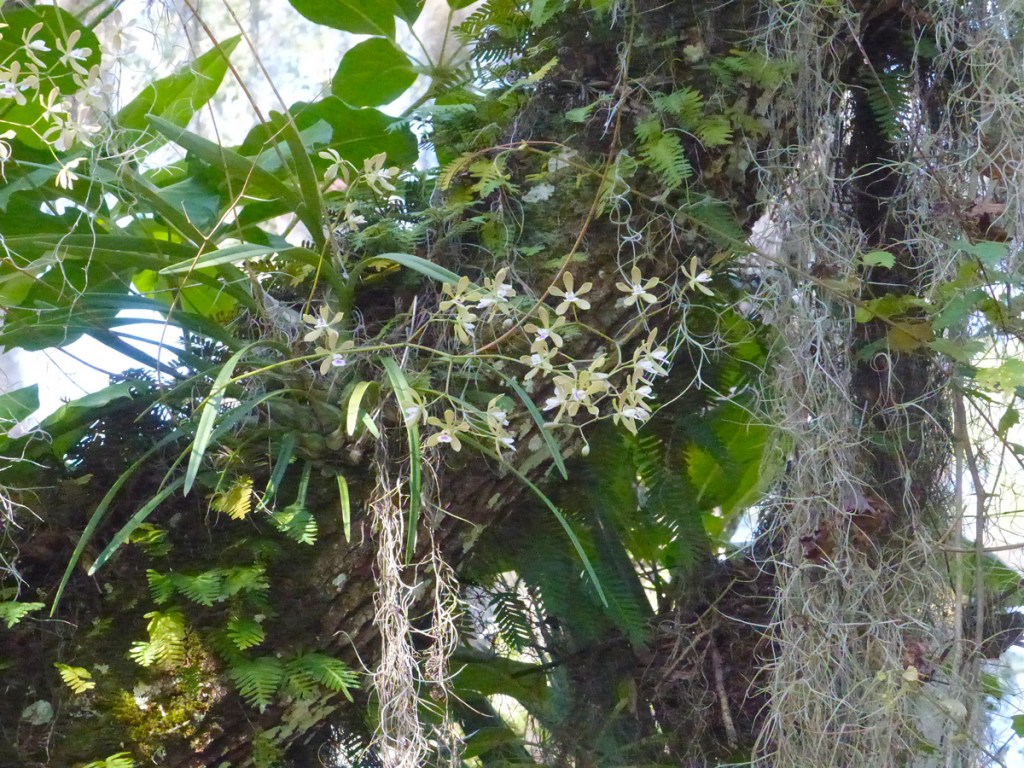
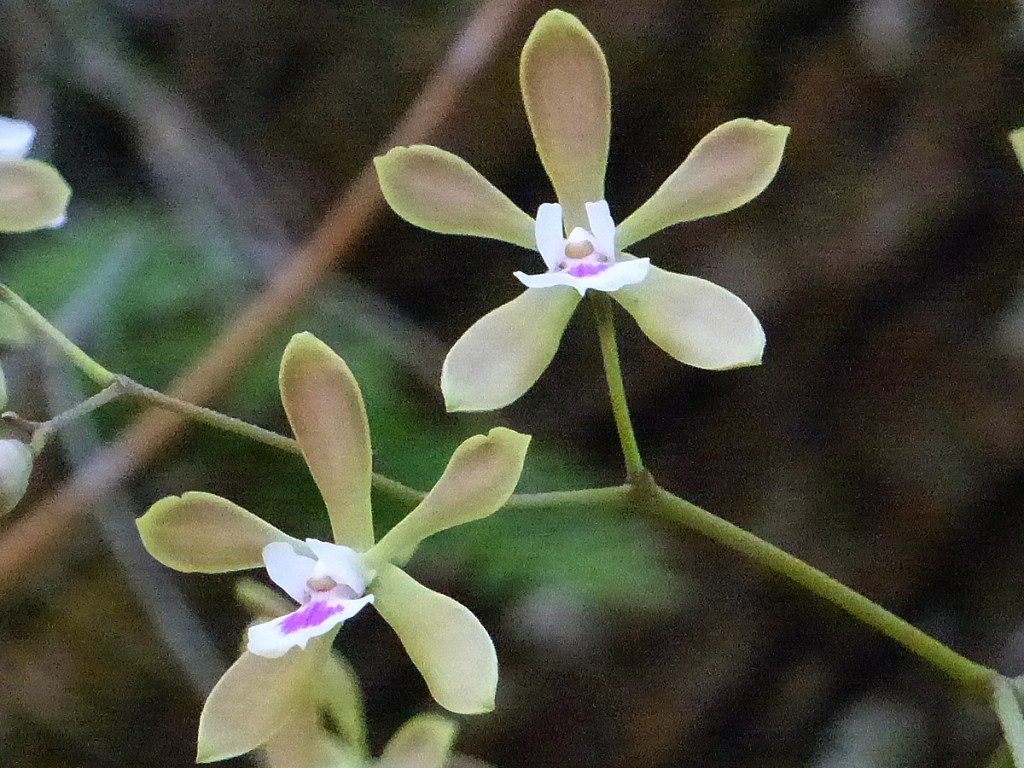
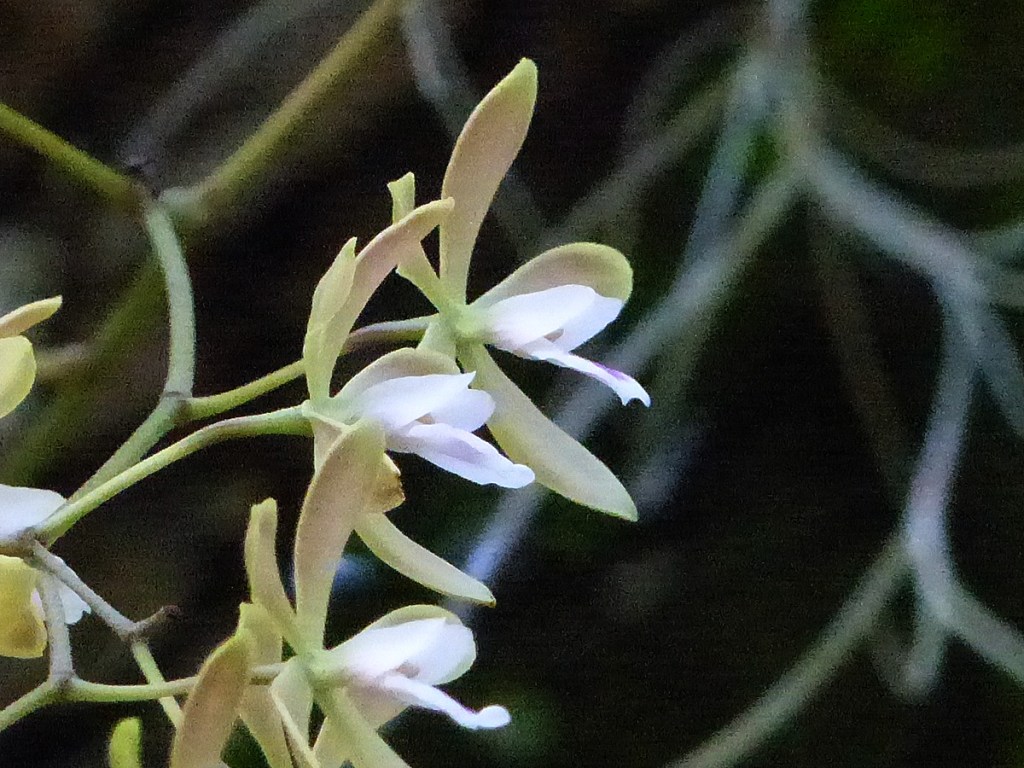
Its flowers have 5 tepals that surround a white lip with a purple spots, stripes or splotches. The tepals can be quite variable in color: greenish, yellow, bronze, copper …
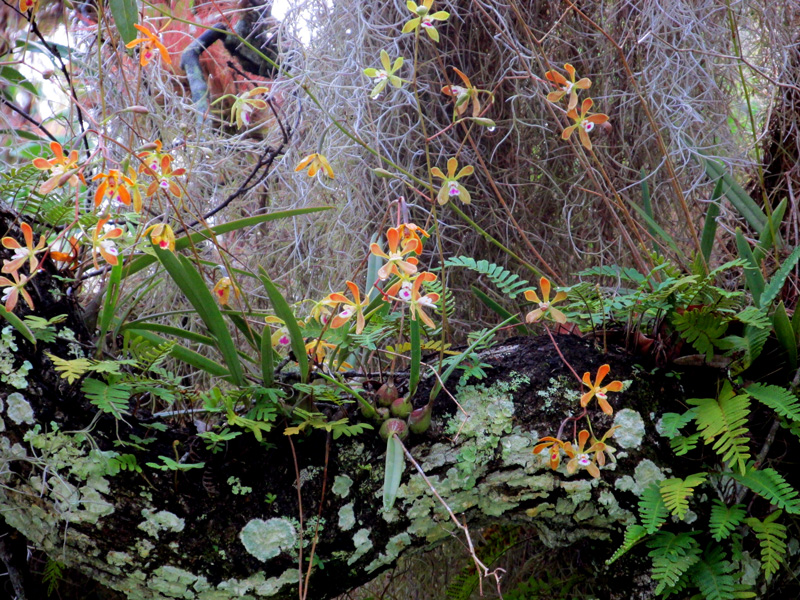
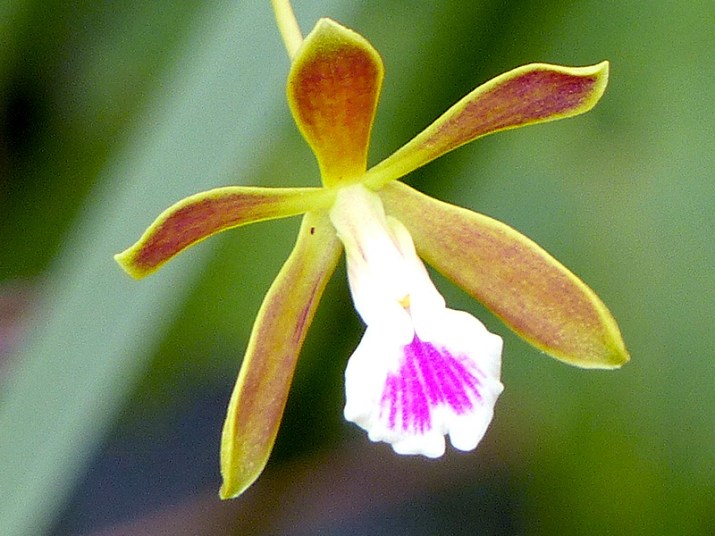
The flowers are held in a raceme (spike) that emerges from the leaf axils.
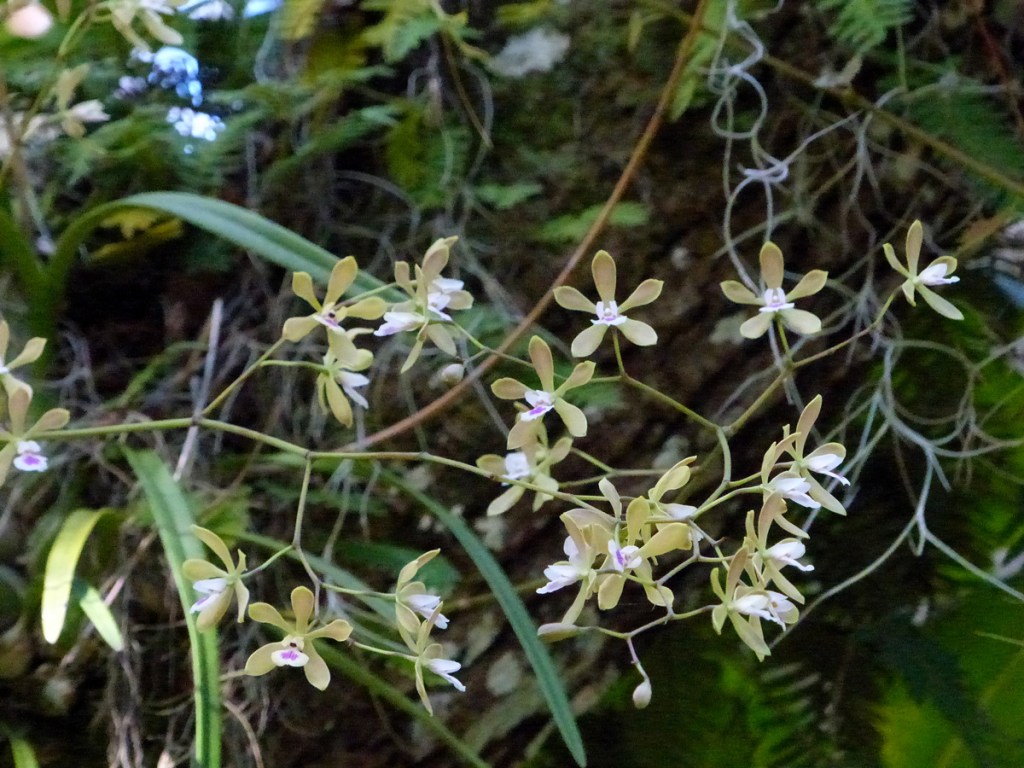
The orchids give off a honey-like fragrance that is strongest from mid-morning to mid-afternoon. Bees are attracted by the sweet smell and are thought to pollinate Florida butterfly orchids.
The Florida butterfly orchids at ORCA are on live oak (Quercus virginiana) trees. Elsewhere, you will find them growing upon red maple (Acer rubrum), bald cypress (Taxodium distichum), pop ash (Fraxinus caroliniana), pond apple (Annona glabra), strangler fig (Ficus aureum), and buttonwood (Conocarpus erectus) in places where the humidity is high.
The leaves grow from bulbous storage organs called pseudobulbs, causing some folks to call this plant the onion orchid. The pseudobulbs are encased in a scarious (thin, dry & membraneous) sheath.