

Seedlings of rosary pea (Abrus precatorius) may look innocent enough, but they can grow into a very vigorous vine, as seen in the Florida Medical Entomology Laboratory (FMEL) parking lot …
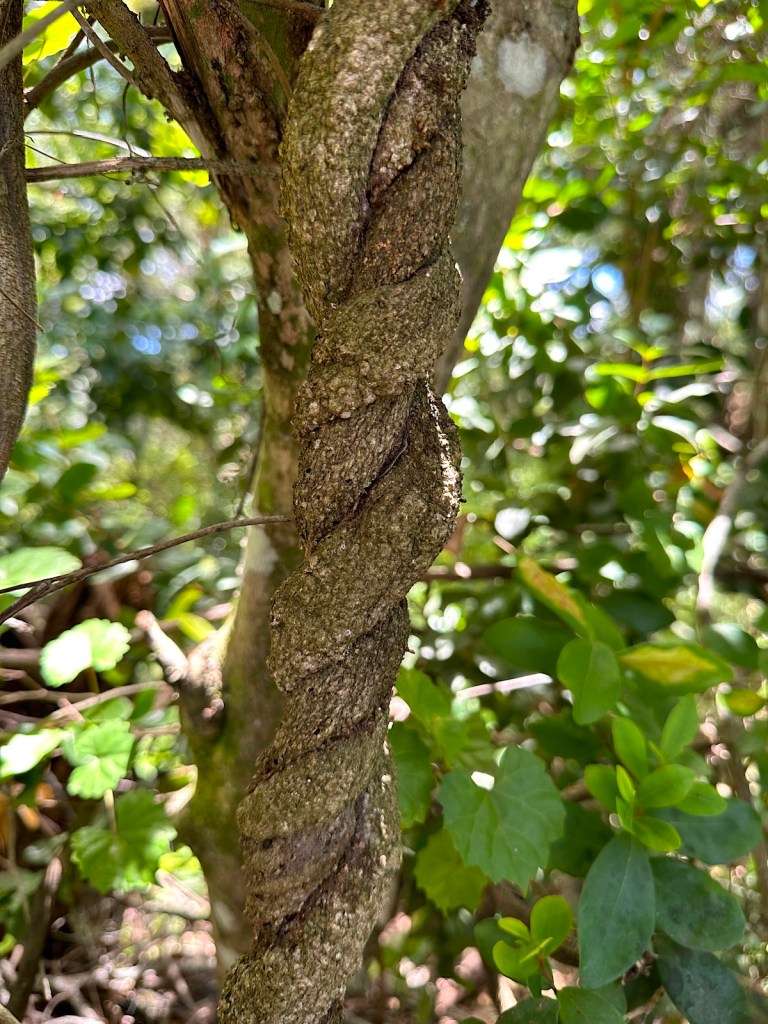
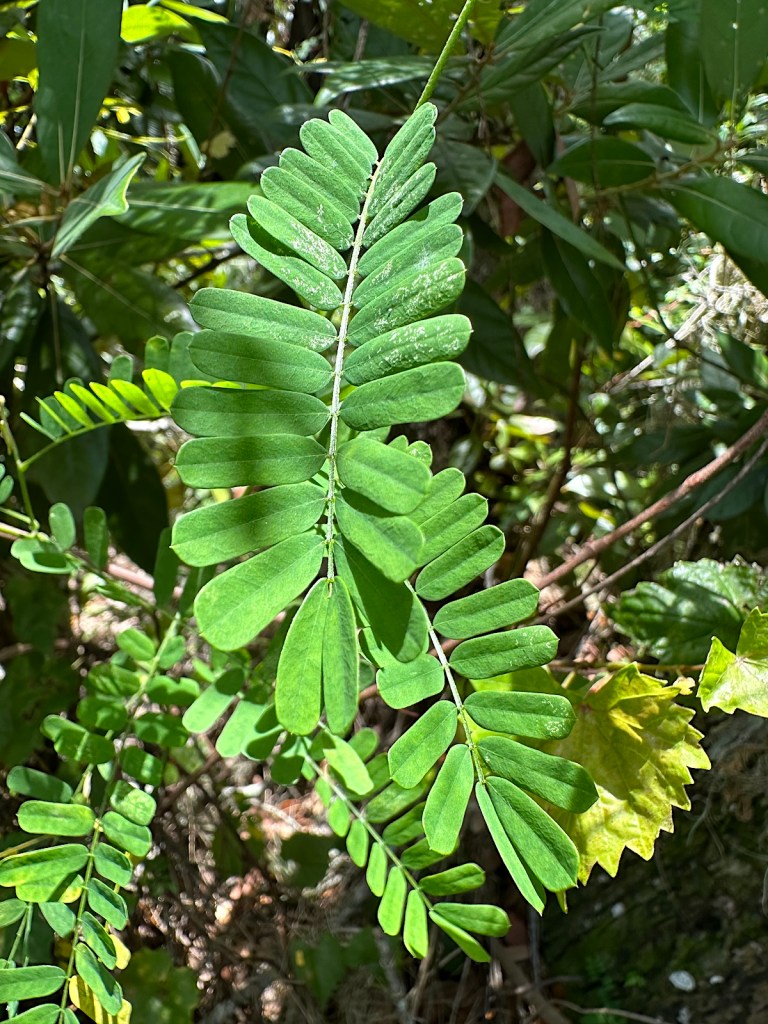
The leaves of this high-climbing, twining vine are alternate with 5 to 15 pairs of oval to oblong leaflets. the foliage has a deceptively delicate appearance.
Before the days of air conditioning, this vine was planted on porches for shade, for its attractive delicate foliage, and and for its “sweet pea” lavender flowers. Each flower matures info a flat pod that contains 3 to 8 shiny red very hard seeds of a standard size.


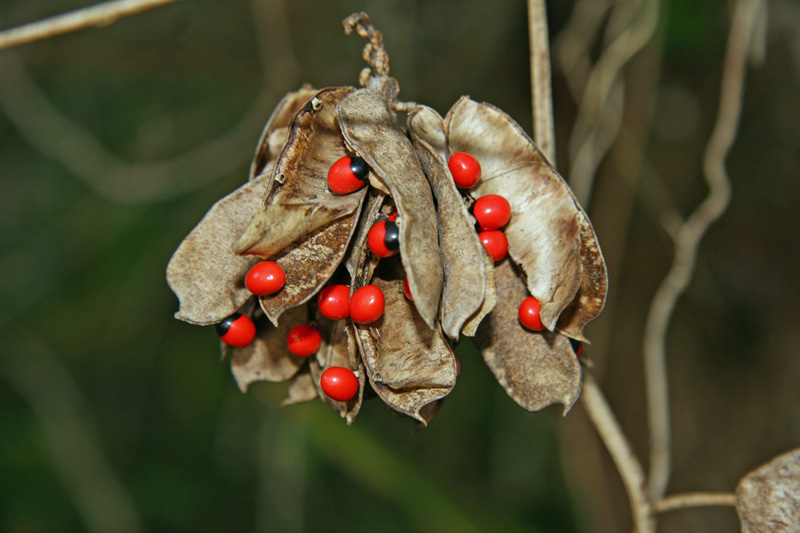
Each seed has a black spot where it attaches to its seed pod, The black spot gives rise to the common name crab’s eye. Other common names refer to its use for jewelry and prayer beads and include Indian bead, jequerity bean, prayer bean, precatory bean, Seminole bead, and Buddhist rosary bead.
The seeds contain abrin, a very poisonous protein. Only one seed — chewed — can kill a child. The seeds can last hundreds of years in the soil. Whenever you can, remove the seed pods and dispose of them in a lined landfill.
 Enjoy the Oslo Riverfront Conservation Area