
The City of Vero Beach calls itself the Hibiscus City and holds a Hibiscus Festival each spring in honor of the non-native hibiscus (Hibiscus rosa-sinensis), a common and reliable landscape plant that comes in a variety of colors. Our native hibiscus plants most often are overlooked.
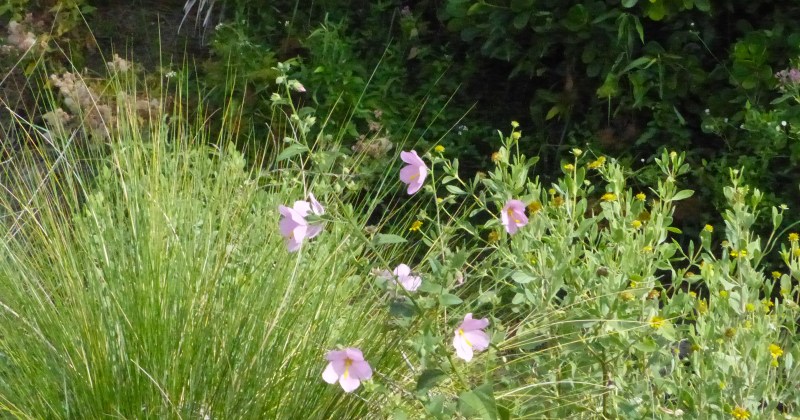
Virginia saltmarsh mallow (Kosteletzyka virginica), though not in the genus Hibiscus, has pretty pale pink hibiscus-like flowers. Also commonly called saltmarsh mallow, seashore mallow, and Virginia fen-rose, this plant is a member of the overall hibiscus family, Malvaceae.

Its pale pink flowers are about 3″ in diameter and sport a central column of yellow stamens.

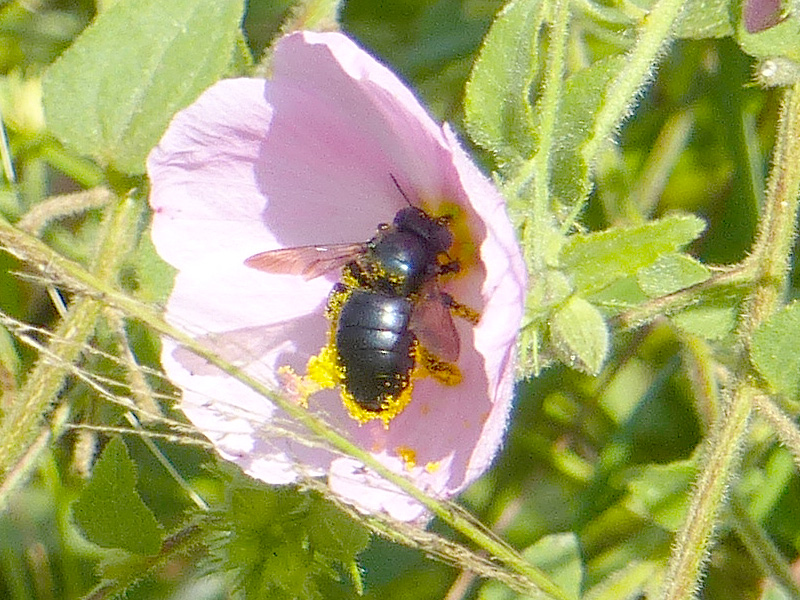
The flowers are visited by ants, carpenter bees, butterflies, and hummingbirds …

The fruit is a five-chambered capsule with a single seed in each chamber …
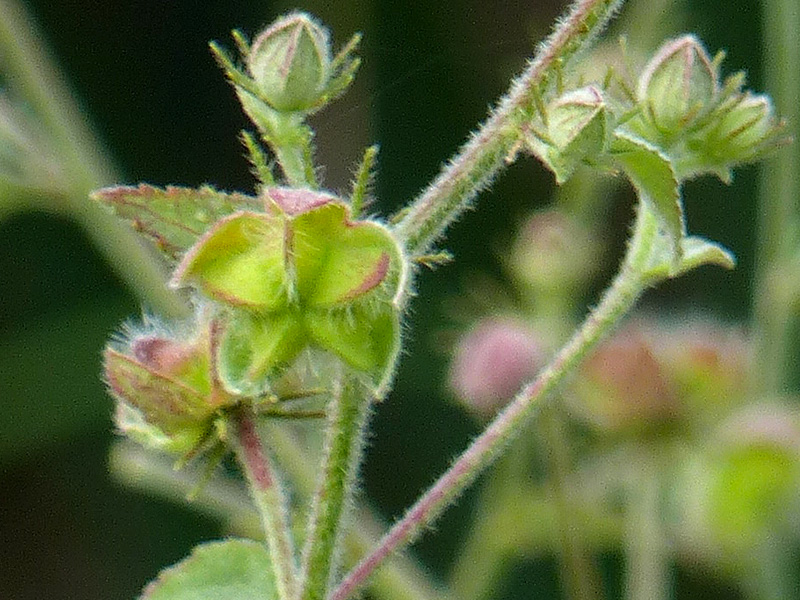
The seeds contain a high concentration of oil and fatty acids, so this plant has been suggested for use in the production of biofuel in salty places. Virginia saltmarsh mallow grows in brackish and freshwater swamps, sloughs, and coastal swales throughout most of Florida. It ranges from Florida to New York to Texas in the U.S., the Bahamas and Cuba and throughout the Mediterranean and Black Sea to Iran.
The flowers are edible and can be steeped to make a tea. The roots can be consumed cooked or raw. The leaves are tough, pubescent, and mucilaginous. Stem fibers can be used to make string.

Look for this pale pink native hibiscus in moist places including along roadsides.
 Enjoy the Oslo Riverfront Conservation Area