

Also commonly called basketgrass, woodsgrass (Oplismenus setarius) is a short-lived native perennial grass of moist, shady places. It grows in a number of locations at the Oslo Riverfront Conservation Area (ORCA) and looked especially lush after the ongoing afternoon rains when Richard Strickland & I walked there on 7-23-2023.
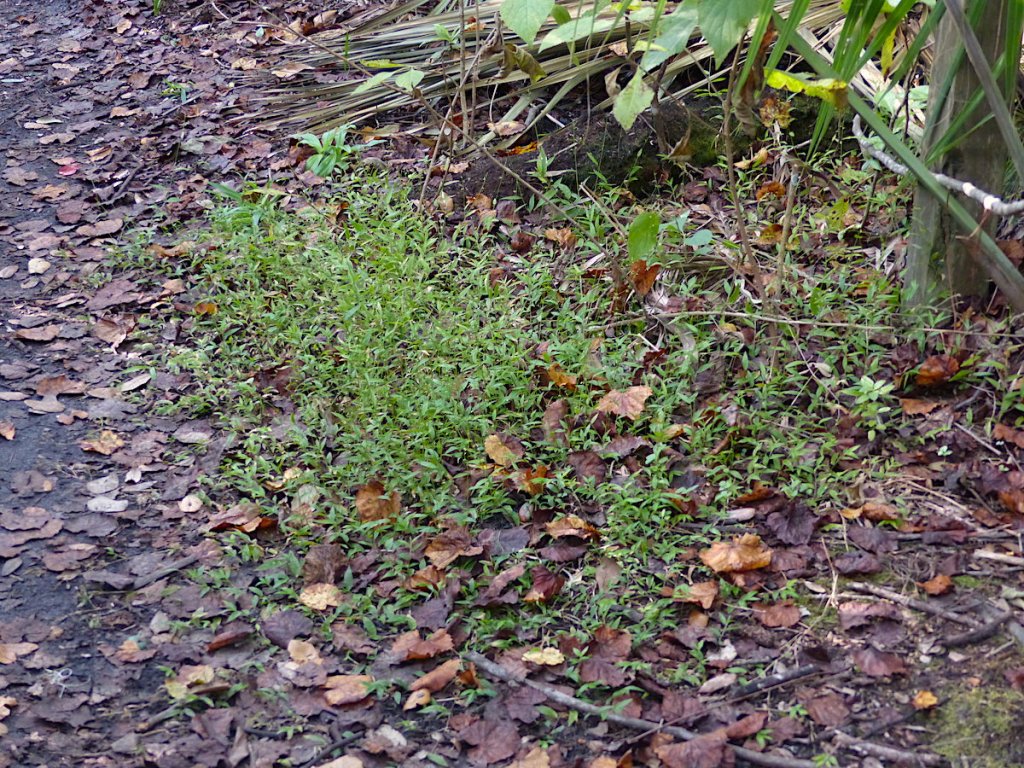
When Dixie Belle & I visited Treasure Hammock Ranch on 7-30-2023, the “lawn” of woodsgrass was lush and lovely ….

When I was a County Extension Agent, local residents often complained of this “weed” growing beneath their oak trees (Quercus virginiana) in the shade and into their “real” lawn. This Polk County Cooperative Extensive Service Blog recommends hand removal and herbicide (glyphosate) of woodsgrass and replacement with non-native liriope and Asiatic jasmine. These plants, they opine, “may out-compete the basketgrass.”
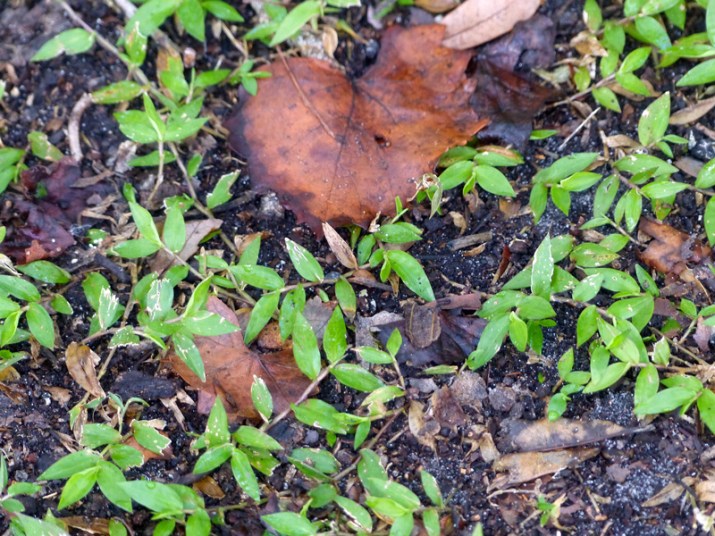
Other folks recommend taking a less competitive approach and embracing woodsgrass as a warm season ground cover for moist, shady spots. This low-growing (to 3″) native grass dies back in the winter months and tolerates only moderate foot traffic.
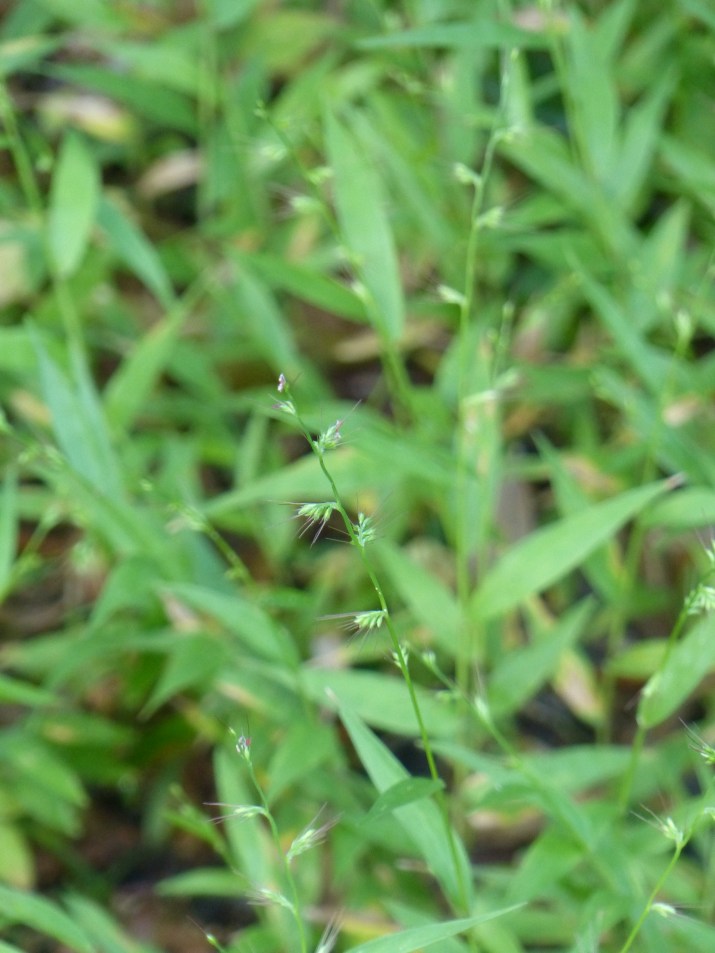
Flowering occurs in the late summer and fall, and its inflorescences can be up to 1′ tall. Its awns (extended pointed tips) are pinkish-purple and covered in a sticky substance that aids in seed dispersal. The genus name Oplismenus, is derived from the Greek word hoplismos meaning weapon and refers to these pointed awns.
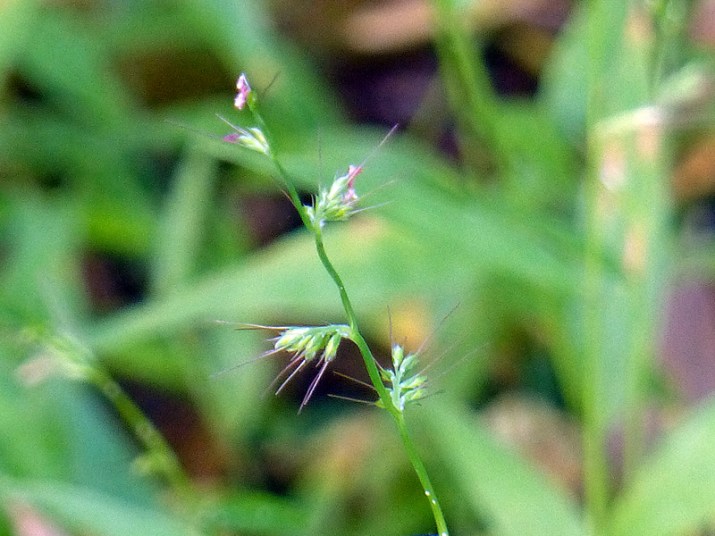
Woodsgrass ranges from North Carolina to Florida to Texas in the U.S. and throughout the Caribbean, Central America, and South America. Instead of trying to vanquish this native grass, the simplest path may to embrace woodsgrass when it is present and enjoy its bamboo like texture.
Weeds, like beauty, are in the eye of the beholder.
 Enjoy the Oslo Riverfront Conservation Area