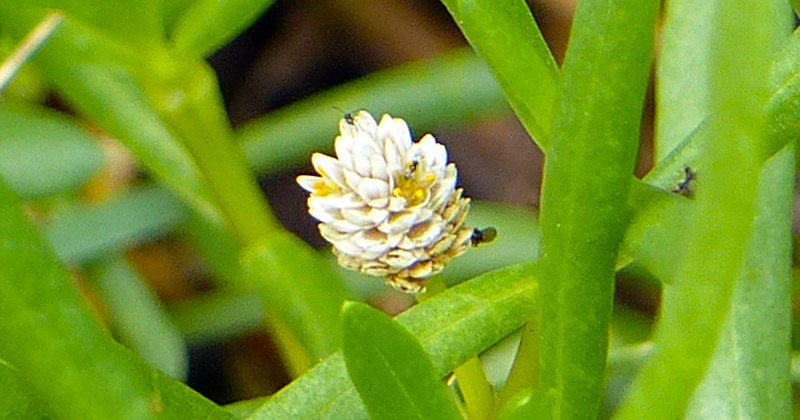

The Devil is the Detail!
Samphire (Blutaparon vermiculare) – at a glance – looks like sea pursalane (Sesuvvium portulacastrum) and grows in similar salty places. Both plants are succulent groundcovers and can be found at the Oslo Riverfront Conservation Area (ORCA) growing on mosquito impoundment dikes. Only after I examined my photos did I realize that I misidentified a plant growing on the mosquito control dike as you turn to reach the Observation Tower. Sadly, this population is no longer present due to mowing by the Indian River Mosquito Control District …

The giveaway was the flower, a silvery white egg-shaped flower, that gives rise to the common name silverhead. Silverweed , saltweed and beach carpet also are common names used for this plant. Flowering occurs throughout the year.
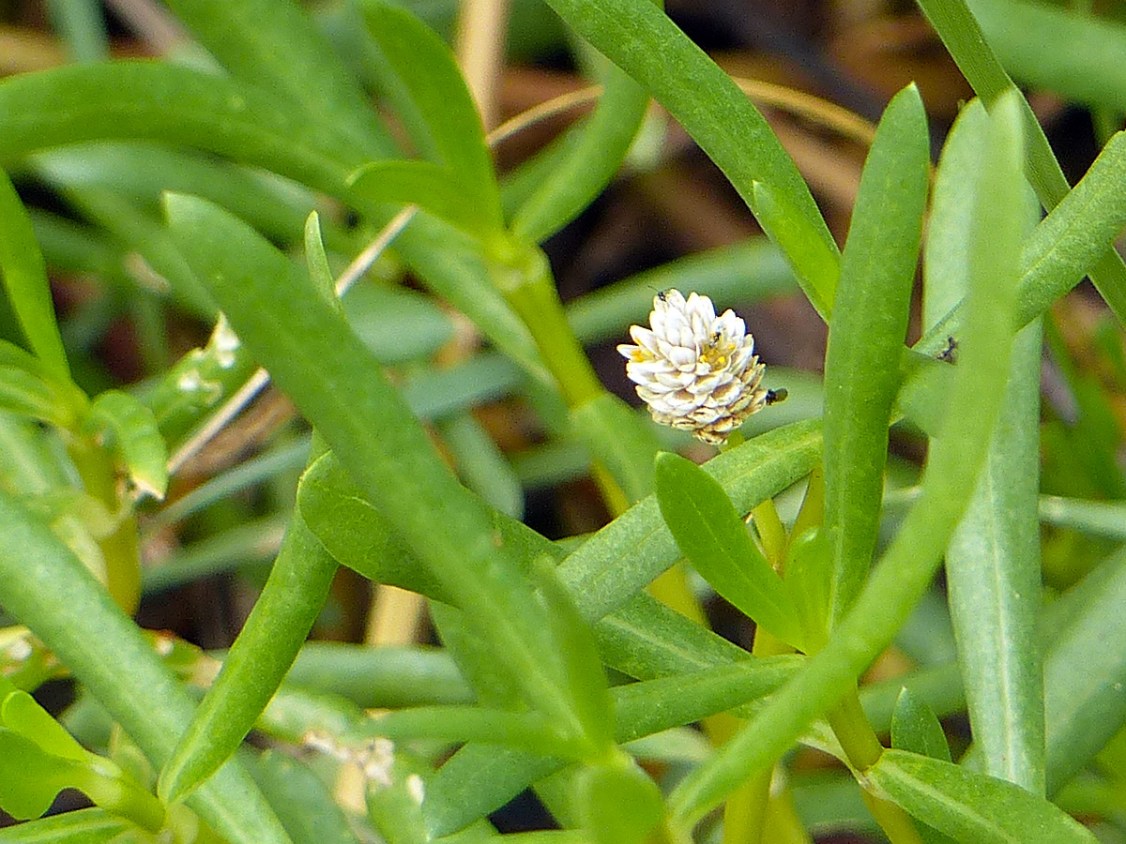
Beach pursalane, by contrast, has pink flowers …

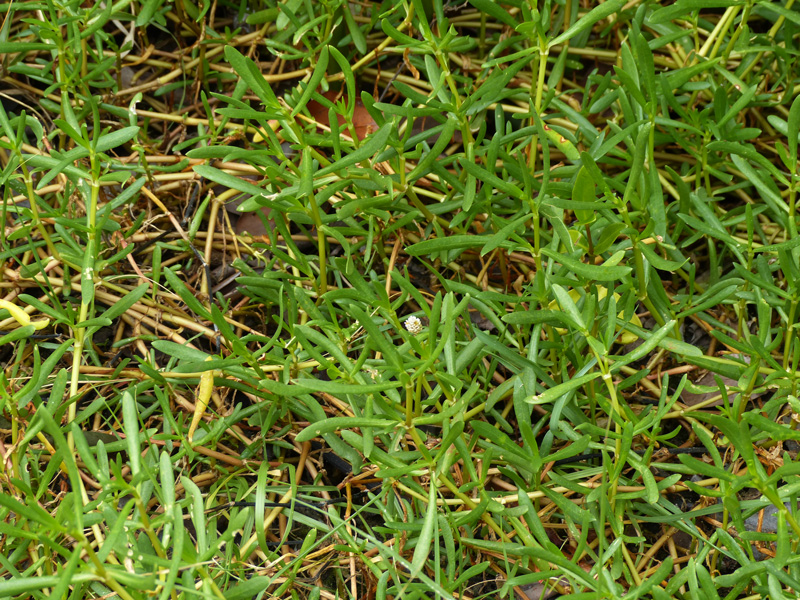
The succulent leaves of samphire can be from .5 to 1.5″ long. They are opposite and stalkless. Samphire forms a mat that can be 2 – 4″ tall in moist coastal areas, swales, and dunes. This tropical plant is native to central & south Florida, from Mexico to Panama, Columbia and Brazil, the West Indies, and the western coast of tropical Africa.
Like seaside purslane, samphire can be consumed as a pre-salted pot herb. ID-wise: The devil is in the detail!
 Enjoy the Oslo Riverfront Conservation Area