

Tropical milkweed (Asclepias curassavica) is a weedy, non-native plant that is a larval host for monarch butterflies (Danaus plexippus). You will find this milkweed growing in sunny, disturbed places including along Oslo Road at the Oslo Riverfront Conservation Area (ORCA) …

Oleander aphids (Aphis nerii) often attack oleander, milkweeds, and other plants in the dogbane family, Apocynaceae. These tiny yellow aphids are shown below on the follicles, the wand-like pods, of tropical milkweed …
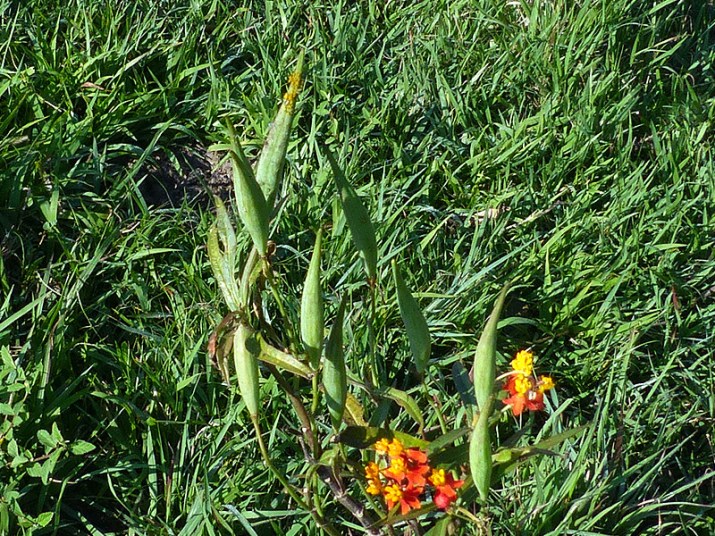
Recent University of Florida (UF) research has shown that oleander aphids impact the vigor of tropical milkweed and the production of monarch butterflies: “The study found that when oleander aphids infested tropical milkweed — a nonnative milkweed species commonly used across southern portions of the U.S. stretching from California to Florida — the butterflies laid fewer eggs on the plants, and caterpillars developing on those plants were slower to mature.” Interestingly, oleander aphids did not have the same negative impact on native milkweeds and monarchs.
Florida is home to 21 species of native milkweeds, but only the fast-growing non-native tropical milkweed is commonly available in nurseries. Though sold as a butterfly host plant, it often is treated with systemic pesticides to deter aphids and other pests (including monarch butterfly larvae).
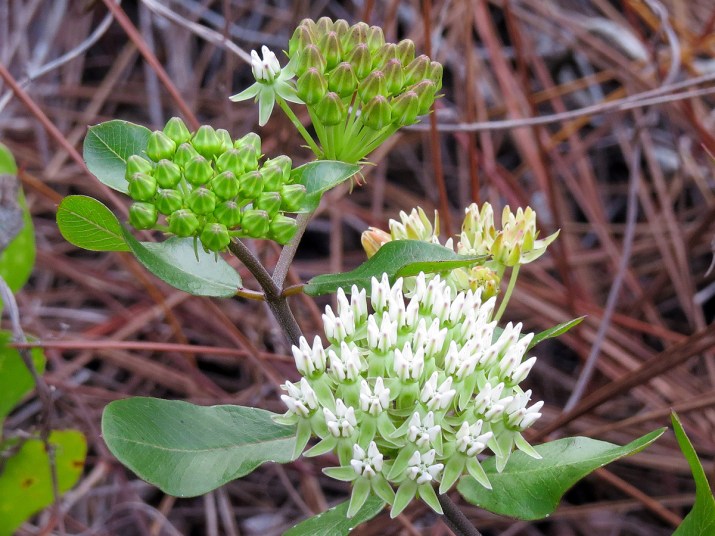
The other milkweed found at ORCA (o the south side of Oslo Road) is home to Curtiss’ milkweed (Asclpeias curtissii) an endangered endemic milkweed of dry scrubby places …
UF recommends that homeowners treat oleander aphids on tropical milkweed with insecticidal soap, but . some scientists believe that the presence of this milkweed (which is native to the Caribbean, Mexico, and central America) in the southeast U.S. prevents monarchs from migrating and harms resident populations by increasing the presence of a protozoan parasite (Ophryocystis elktoscirrha) (OE) that deforms the wings of emerging monarchs.
Consider using native milkweeds instead of this high-maintenance weed.
 Enjoy the Oslo Riverfront Conservation Area