

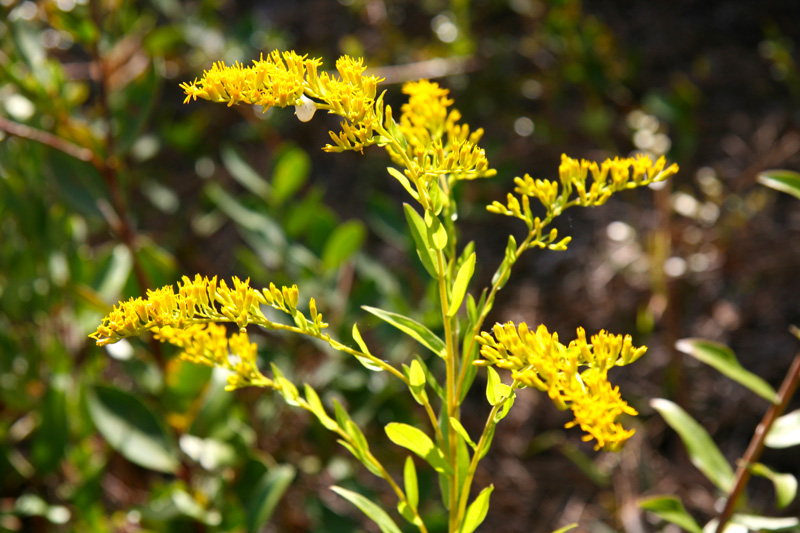
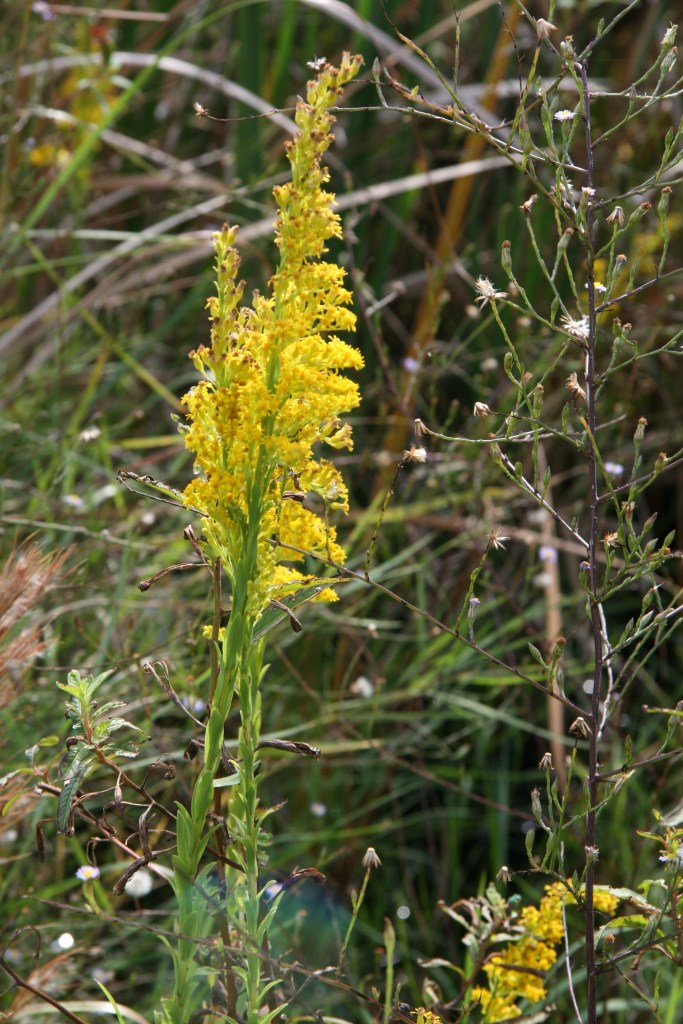
Ever notice that when you look at Florida wildflower book with color guides on the sides of the pages, yellow is the predominant color. Yellow flowers are particularly prolific in the fall.
Goldenrods bloom in the fall and have an undeserved reputation for causing allergies. Goldenrod pollen is too heavy and sticky to be wind-borne. Ragweed (Ambrosia sp) is the real culprit.
Twenty-two different goldenrods (Solidago sp.) are native to Florida, and two species grow at grow at the Oslo Riverfront Conservation Area. Seaside goldenrod (Solidago sempervirens) is the most common. It grows throughout eastern North America from Newfoundland to both coasts of Florida, as well as in Mexico and the Bahamas.
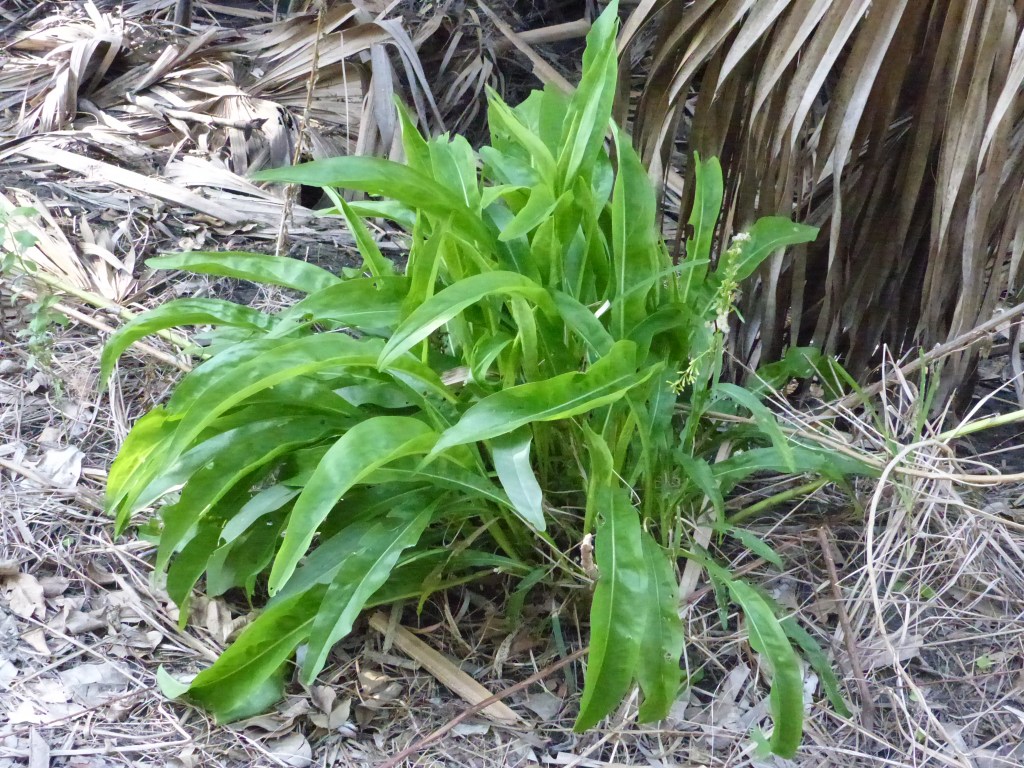
The genus name Solidago means to make whole or heal. The species name sempervirens means always green and refers to the always present and distinctive basal rosette of fleshy, waxy leaves that help to retain water and repel salt. These basal leaves are strap-like and alternate.
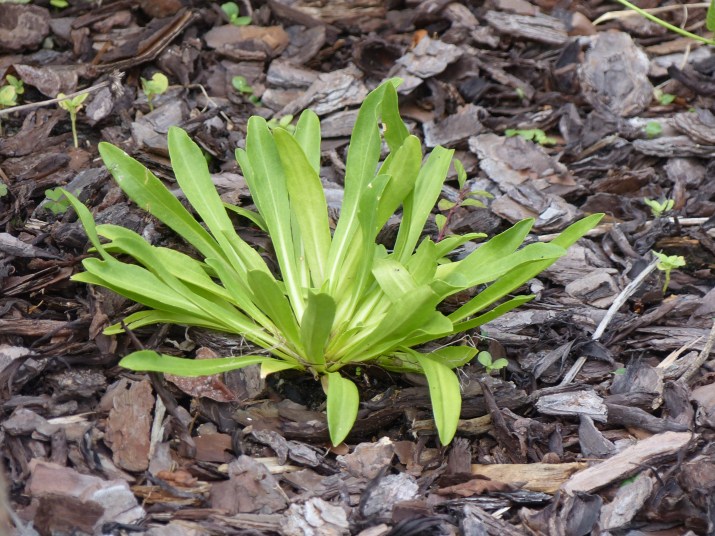

Bloom spikes (terminal racemes) can grow to be many feet tall especially under shady conditions. The leaves along the flower stalks are sessile (directly attached to the stem) and much reduced in size.

Some botanists believe that there are two distinct varieties: Solidago sempervirens var. mexicana, a smaller variety that grows in inland places tied flower spikes 3 -4′ tall and Solidago sempervirens var. sempervirens, a larger coastal variety with flower spikes that can reach up to 8′. Solidago sempervirens var. sempervirens likely is more salt tolerant and would be the variety native to Indian River County that we find growing in full sun or partial shade in swales and brackish marshes.

Bees, wasps and other pollinators visit the bright yellow flowers that are held in one-sided clusters. It is these insects – not wind – that move the heavy , sticky pollen. Insectivorous birds seek out goldenrods to feast upon the pollinating insects. .

With its evergreen and always present foliage, seaside goldenrod makes an excellent slat- and drought-tolerant landscape plant for sun or partial shade. You can, if you wish, cut back the long inflorescence for more flowers and compactness.
 Enjoy the Oslo Riverfront Conservation Area