

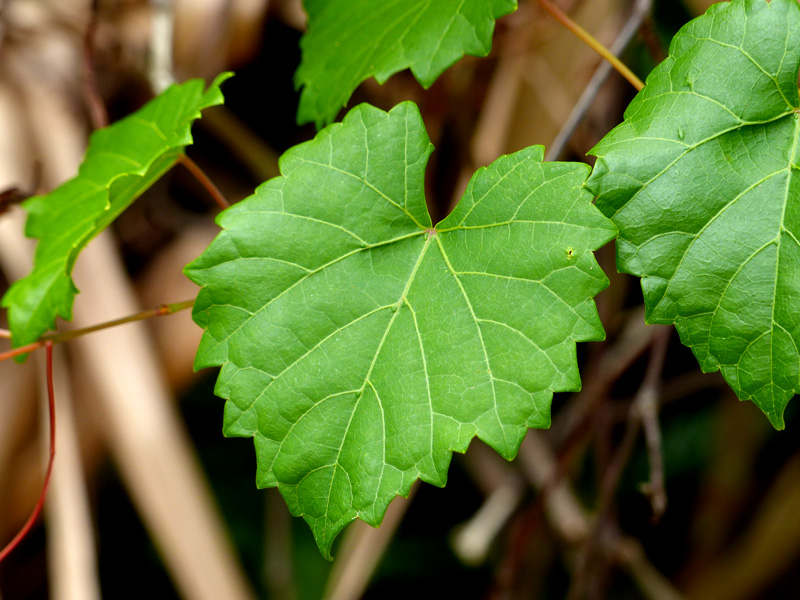
Wildlife loves muscadine grapes (Vitis rotundifolia). This high climbing, woody vine is native to the southeastern U.S. to Texas. Its species name rotundifolia refers to the round shape of its leaves.
Its climbs via tendrils and in hammocks grows up through the treetops in search of sun and is shown below at the Oslo Riverfront Conservation Area with resurrection fern (Pleopeltis polypodioides) growing upon its deeply furrowed surface …

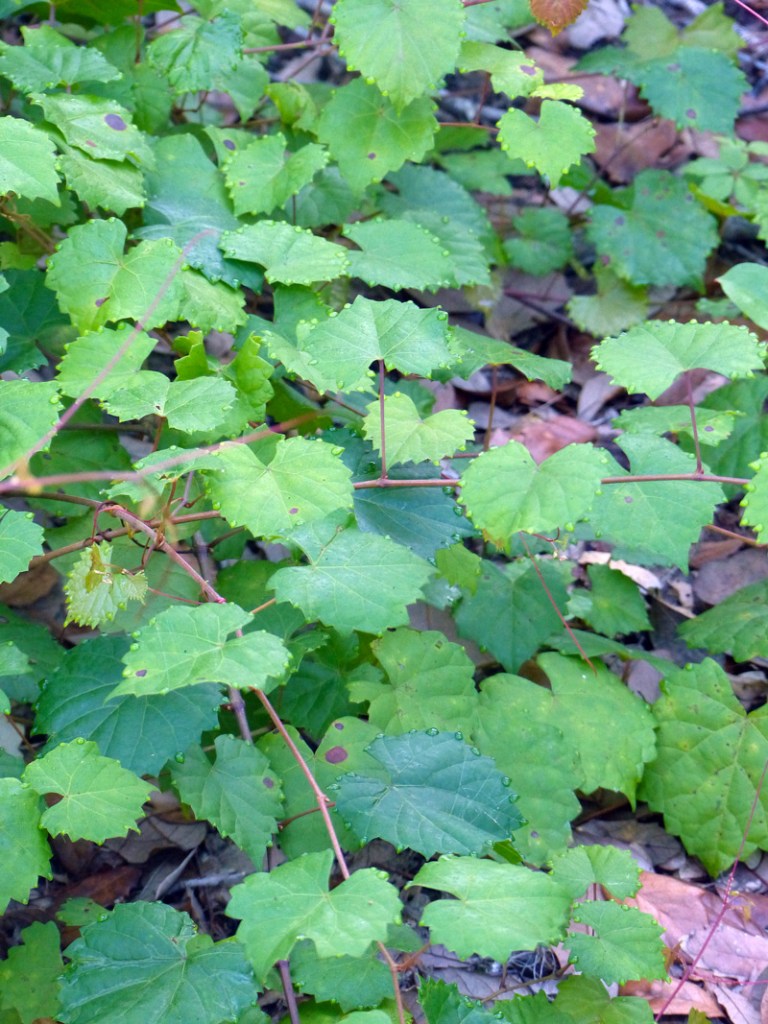
In open, sunny disturbed spots and along hammock edges, it can be pretty prolific …
Also known as scuppernong grape, this vine flowers in the spring …

The fruits – grapes – are about dime-sized, variable in sweetness, thick-skinned, and dark purple when ripe.

Muscadine grapes are grown for the production of wine in Florida but not as table grapes due to their (usually) tough skin and seeds. New work at the University of Florida has a new twist. Muscadine grapes are freeze-dried and de-seeded to produce a palatable treat that is higher in antioxidants than regular grapes: “By freeze-drying the muscadine grapes, the flesh and skin become soft and light like a foam peanut, and they have a delightful crunch and melt in your mouth like cotton candy. The taste is light and crisp, with a sweet-and-sour tartness.”. Click here to read more about this research.
 Enjoy the Oslo Riverfront Conservation Area