

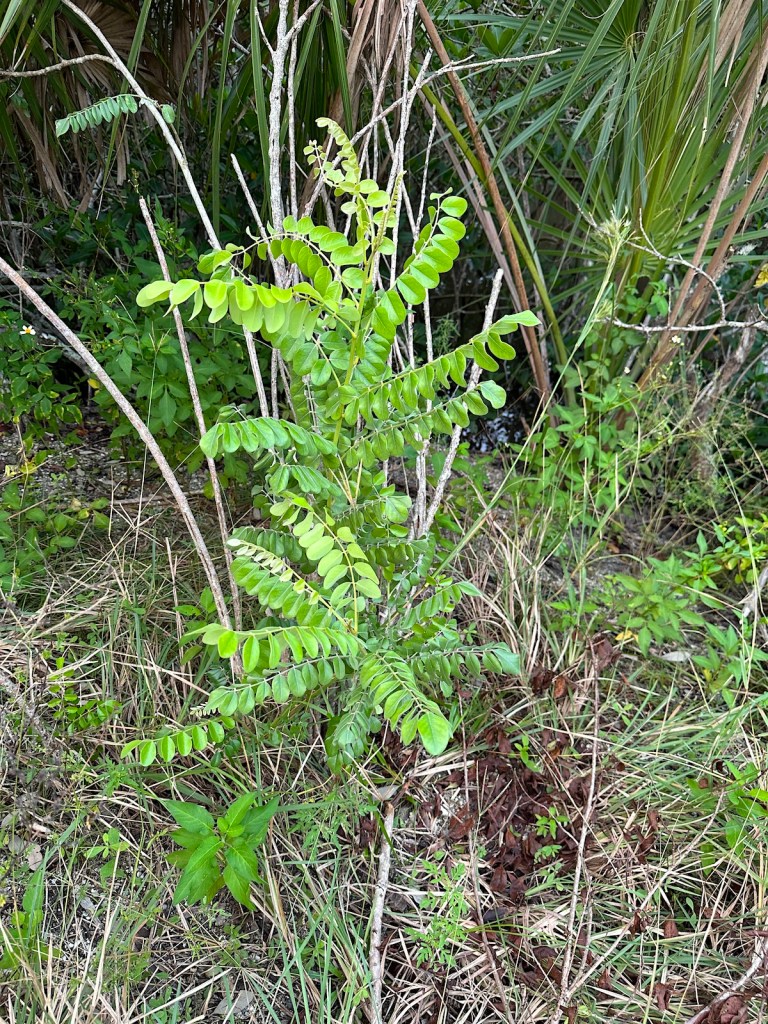
This yellow necklacepod (Sophora tomentosa var. truncata) has “volunteered” in an open, recently mowed area at Bird’s impoundment at Pelican Island National Wildlife Refuge (PINWR) where you can go east or west on the 2 1/2 mile impoundment dike loop. You will find some more yellow necklacepod in the the bathroom parking lot.
Yellow necklacepod is a long-lived perennial shrub that grows to be 10’+ feet tall and blooms throughout the year …
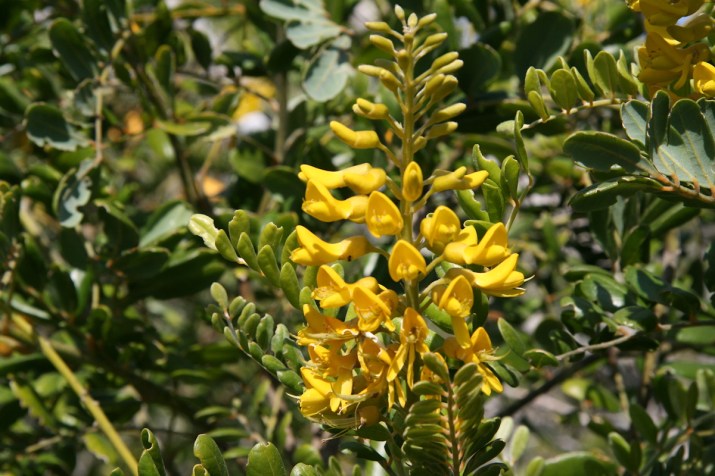
Its flowers are held in terminal racemes (spikes) that are 6 – 12″ long and protrude from the foliage. Each flower has a broad upper petal (banner), 2 adjacent petals (wings), and a fused bottom petal (keel). Bees,s butterflies, moths, and hummingbirds visit the flowers.
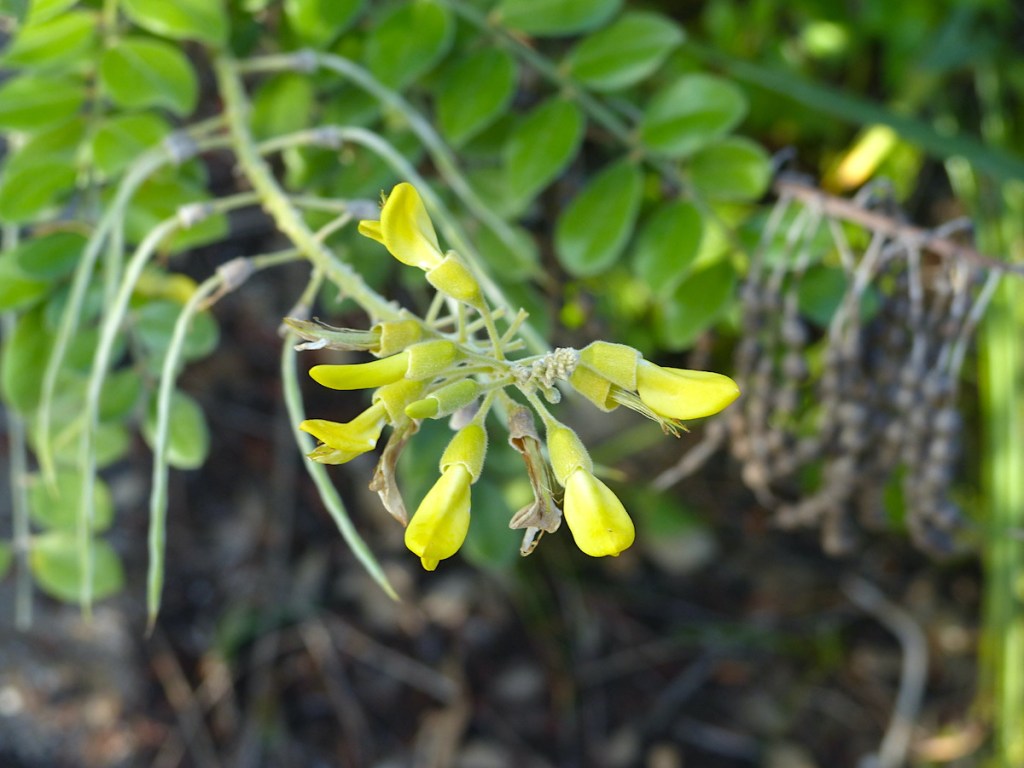
Once pollinated, the long pods (legumes)m begin to form …

As they mature, the pods become dark brown and constrict around each seed, giving rise the common name of necklace pod. Be aware that the hard seeds are poisonous.

more indehiscent

Many members of the pea family, Fabaceae, have pods that split length-wise (dehisce) to expel the seeds. Yellow necklacepod, by contrast, is indehiscent. The foliage of Florida’s native yellow necklacepod is odd pinnate and only slightly hairy when young.

Sometimes called silverfish, the non-native yellow necklace pod (Sophora tomentosa var. occidentalis), which is native to Texas, is quite fuzzy and silvery looking because its leaves, young and old, are covered with many fine hairs. It also is smaller in stature growing to be only 6′ tall. Older leaves of the native yellow necklacepod are glabrous (smooth), while a few of the youngest leaves have some hairs os them. These closely related plants hybridize, and usually only the non-native yellow necklacepod is available from “regular” nurseries that do not specialize in native plants.
The native yellow necklacepod is very salt tolerant, requires full sun to thrive, and grows on the backside of beach dune, the edges of tidal marsh and mangrove forests, and in sunny spots in maritime hammocks and coastal strands.
 Enjoy the Oslo Riverfront Conservation Area