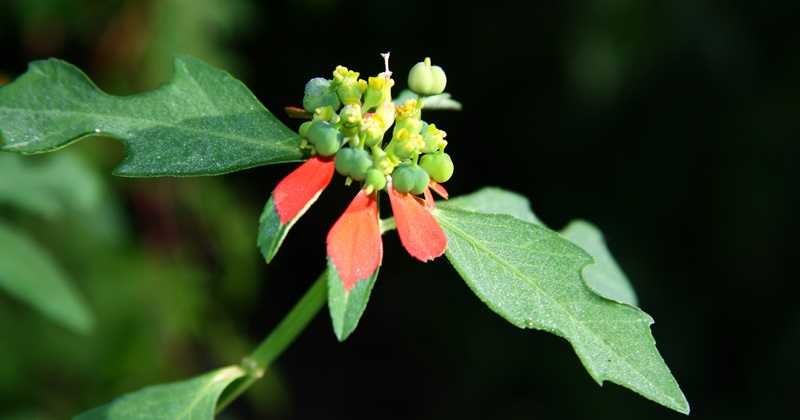

Florida’s native poinsettia, paintedleaf (Euphorbia cyathophora), is native to much of the U.S, Mexico, the Caribbean, Central America, and South America. This native annual wildflower goes dormant in cooler climes but grows year-round in warmer locales.
In Florida, paintedleaf grows in hammocks, in pine flatwoods, and especially in disturbed places. You may discover it growing in your yard. Like its well-known celebratory kin, the “real” poinsettia (Poinsettia pulcherrima), paintedleaf has showy colored bracts (modified leaves) and tiny flowers. The dramatic bracts of the cultivated “Christmas” poinsettia, a native of Mexico, are much, much larger and more colorful.
Fire-on-the-mountain, Mexican fire plant, wild poinsettia, dwarf poinsettia, painted poinsettia, and Florida poinsettia are other common names for this plant. Its eye-catching bracts can be splotched with red, pinkish or whitish “decorations”.
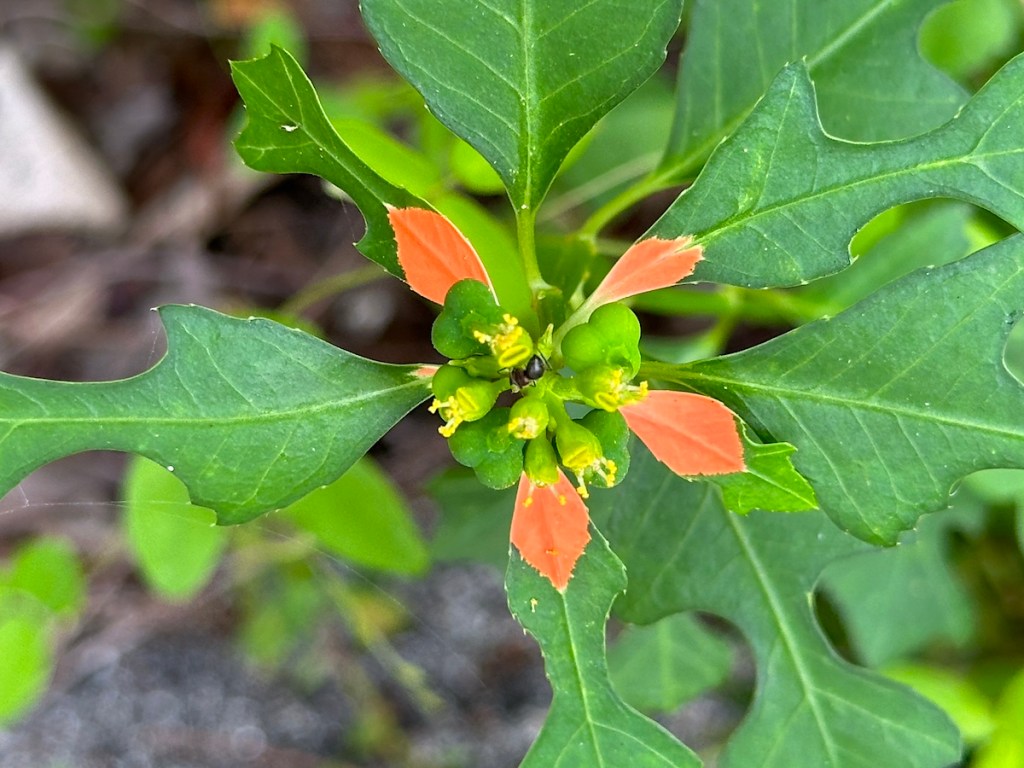
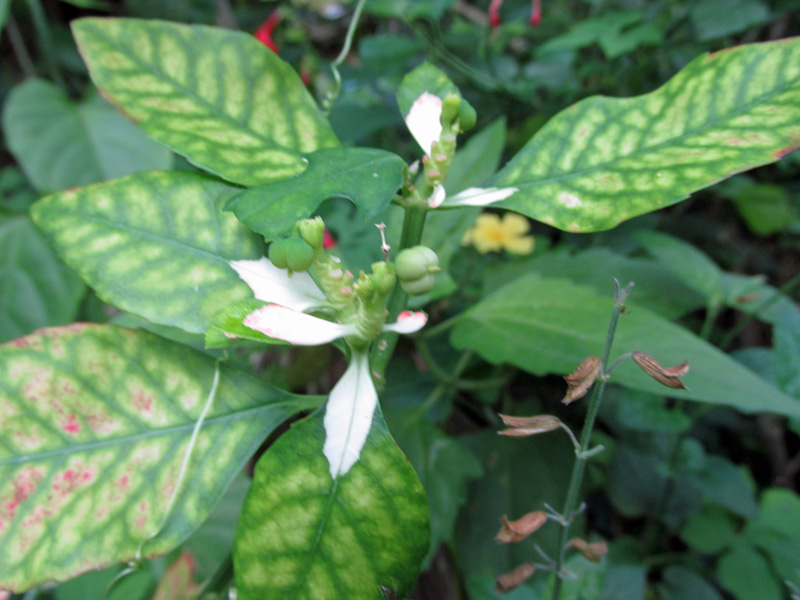
Look closely to discover the minute greenish yellow flowers that are held in a small cup-like structure called a cyathia, which gives rise the species name cyathohora. Each cup contains contains 3 green ovaries (female flower parts) with 3 stamens (pollen bearing male flower parts) that split at the top and appear at a glance to be 6 stamens. Bees, butterflies, and other pollinators visit the tiny flowers.
Along the rim of the cup is an oblong nectar gland. This extrafloral nectary, a nectar source that is not part of the flower itself, may be an additional attractant for pollinators or may be a device to attract ants that protect the plants from insects that might munch its leaves (or both). Look carefully to spot the ant …
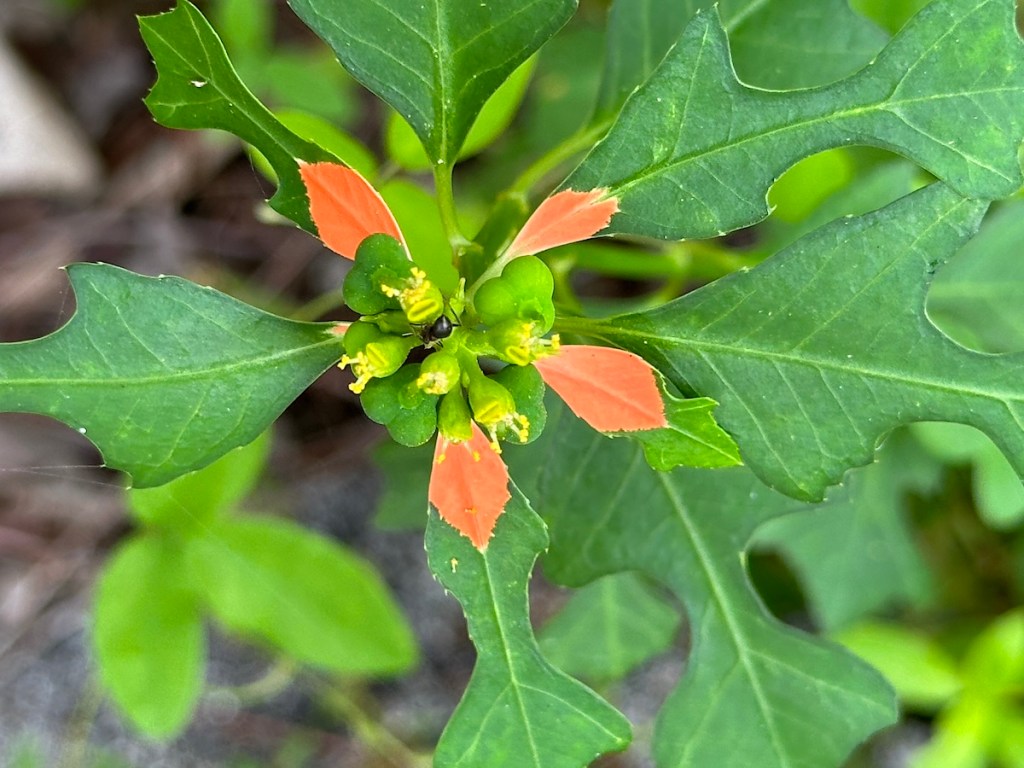
The fruit is a 3-lobed capsule that pops open and can be eject its 3 seeds up to 3’ away. The tiny seeds are egg-shaped and brownish black. Mourning doves and other granivorous birds consume the seeds.
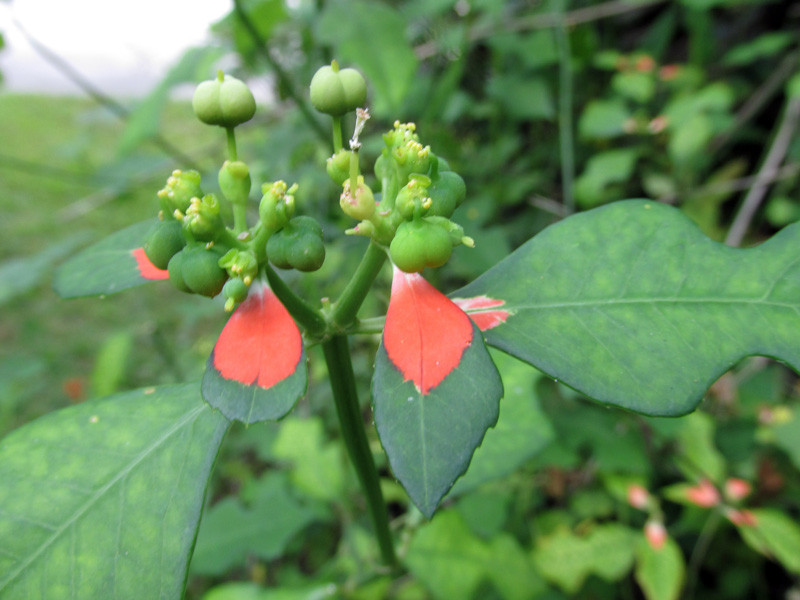
Paintedleaf is very variable: Not only in the color of the bracts but in the shape of its leaves. Its leaves can be narrow and linear, oblong, fiddle-like, lobed, or toothed. Most of its leaves are alternate, but the bottom and top leaves can be opposite. This self-seeding wildflower grows to be about 2’ tall, and its upright stems contain a white, milky sap that can be irritating, as do many other members of the spurge family, Euphorbiaceae.
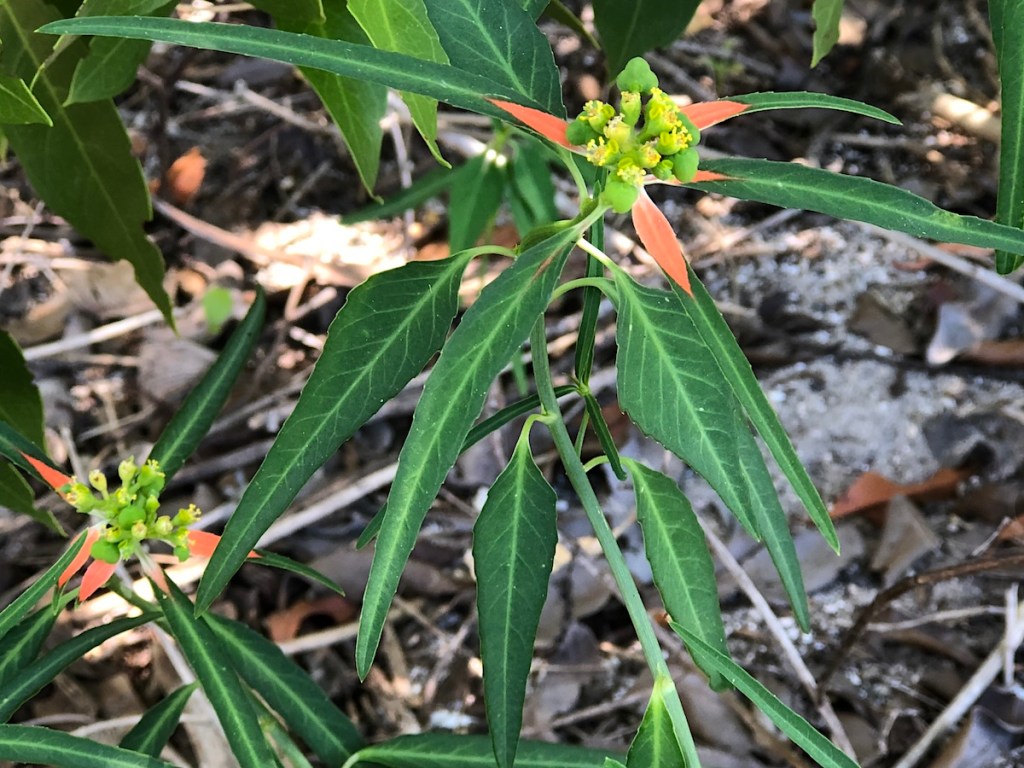

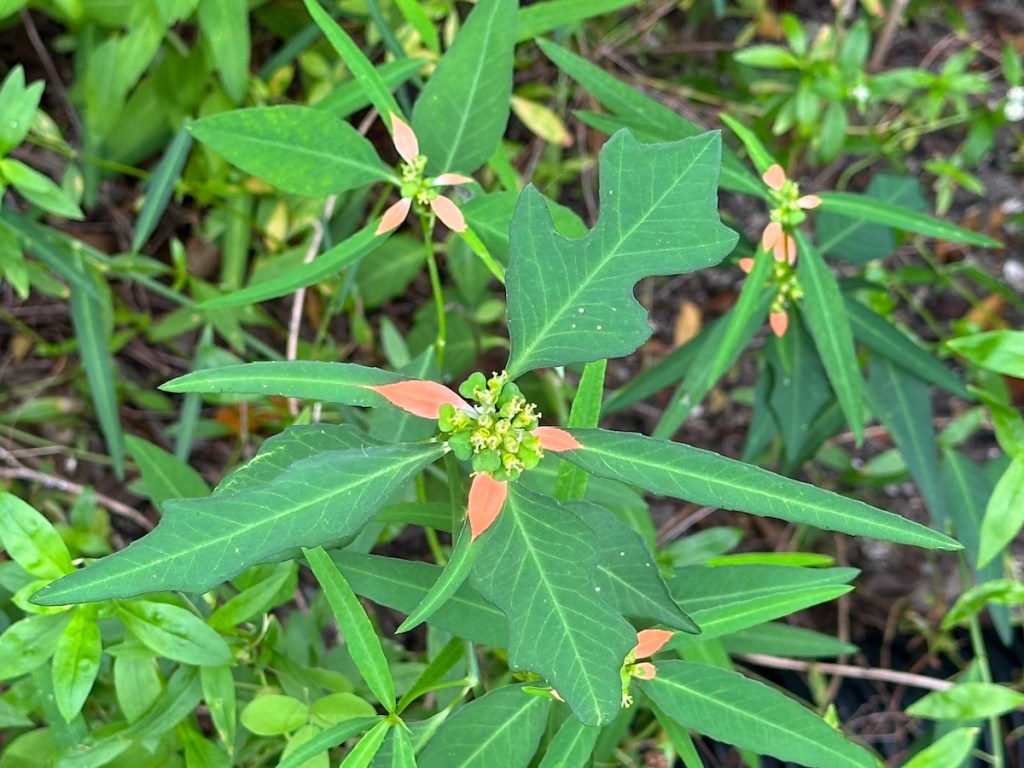
This durable and variable plant has spread to the Pacific and Indian Ocean basins, Asia and Australia, where it is considered to be invasive. Here in Florida enjoy this native annual when it “volunteers” in full sun or partial shade in your yard, along roadsides, and on our conservation lands.
 Enjoy the Oslo Riverfront Conservation Area