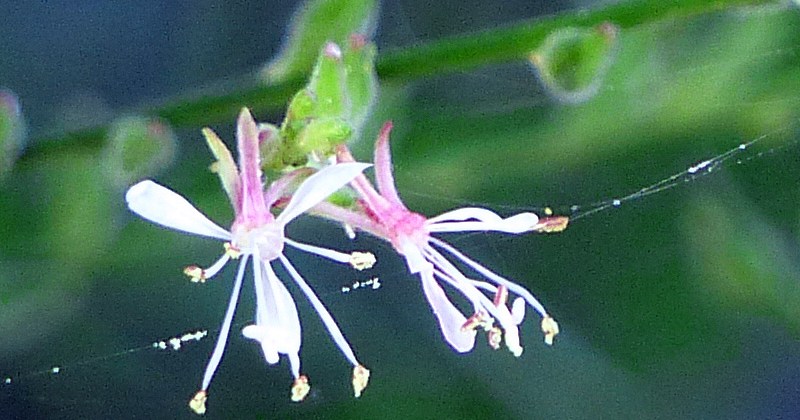

Plant names can be problematic. Common names are not standardized. And, botanists change botanical names.
Cindy Hersh (Class of 2016) on our walk at the Barrier Island Sanctuary and Education Center on 2/11/2024 pointed out a wispy & lovely wildflower. She called it guara. Donna Winter (Class of 2016) mentioned that it looked like southern bee blossom to her. They were taking about the same pretty plant. Other common names for this plant include southern gaura, southern butterfly weed, and morning honeysuckle.
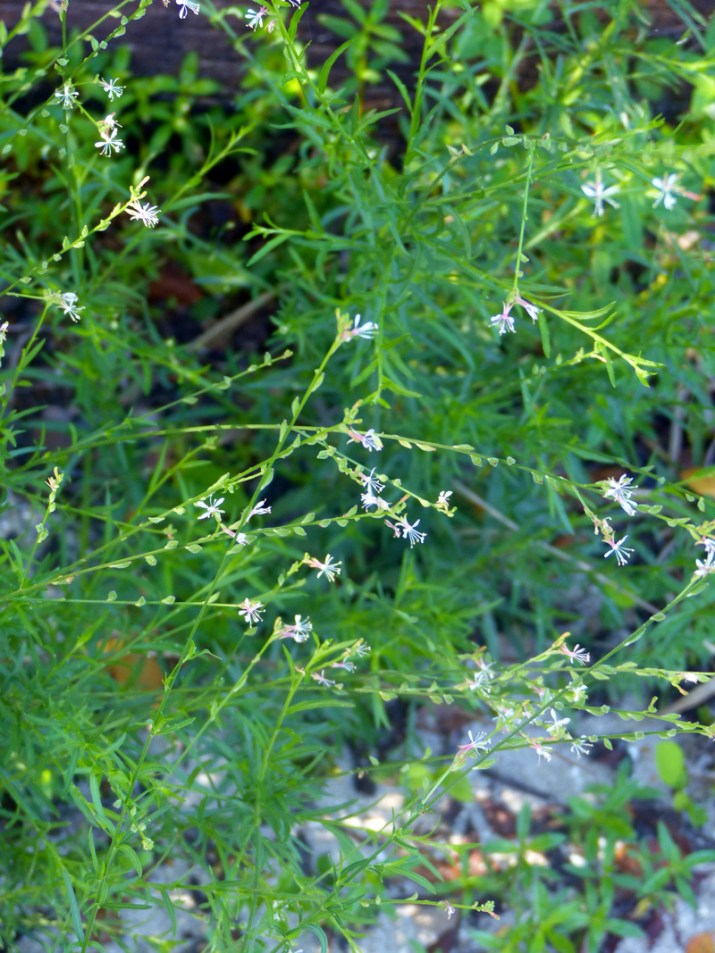
Southern bee blossom is the “recommended” common name for Oenothera simulans. It once had the botanical name Guara angustifolia. This “old” genus name, Guara, comes from the Greek word gauros meaning superb, a reference to its small but beautiful flowers. The “old” species name, angustifolia, means narrow-leaved.

Southern beeblossom is native to the Bahamas and the southeastern United States, where you will find it growing in the sandy soils of dunes, open woodlands, fields, and roadsides.
In south Florida this annual usually flowers spring from February through November. Its flowers attract a wide range of small insects including moths, ants, and bees. White flowers open late in the day and are pollinated by moths and other nocturnal insects. It is a larval host plant for the white lined sphinx moth (Hyles lineata) and the clouded crimson flower moth (Schinia gaurae).
By the next day the flowers become pinkish in color and fade away over the course of the day. Granivorous birds consume the seeds, which, if not eaten, germinate readily near the “mother” plant. Note the unripe seed pods below.
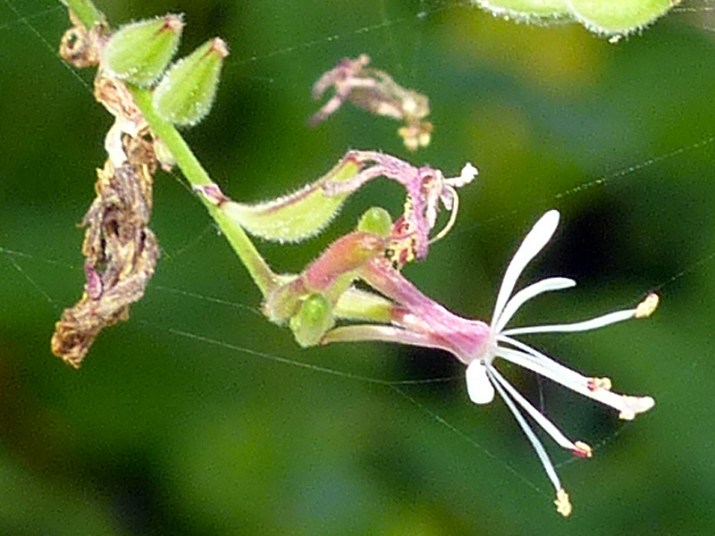
Southern beeblossom is a member of the evening primrose family, Onagraceae. The flowers of plants in the evening primrose family open at night. Another member of this family, seaside evening primrose (Oenothera humifisa) looks very different but grows in similar spots.
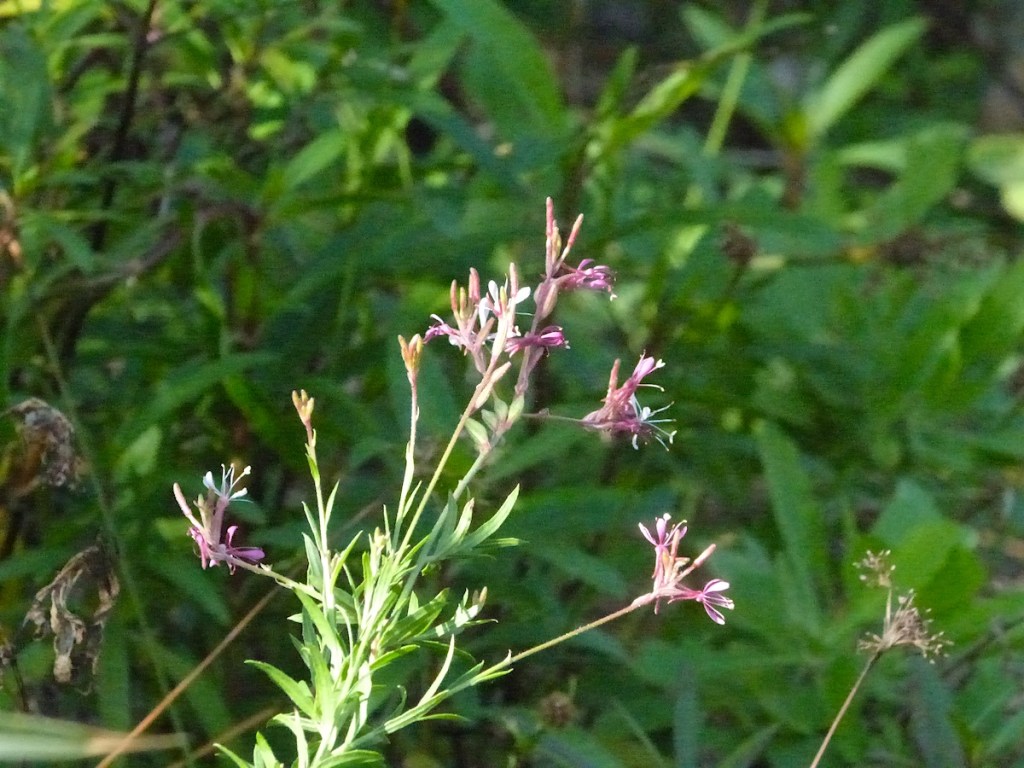
 Enjoy the Oslo Riverfront Conservation Area