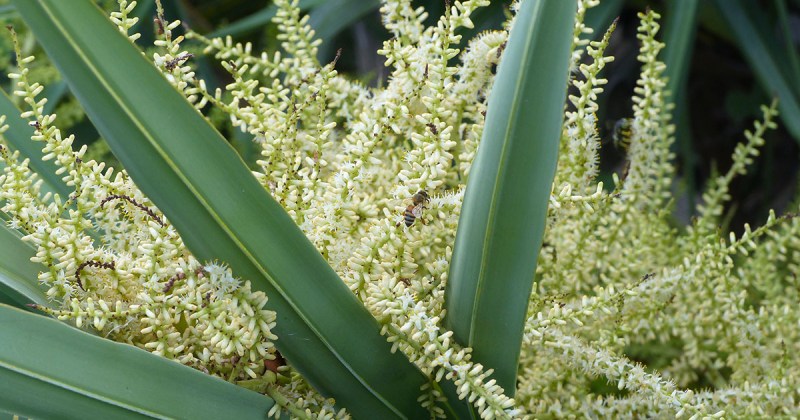

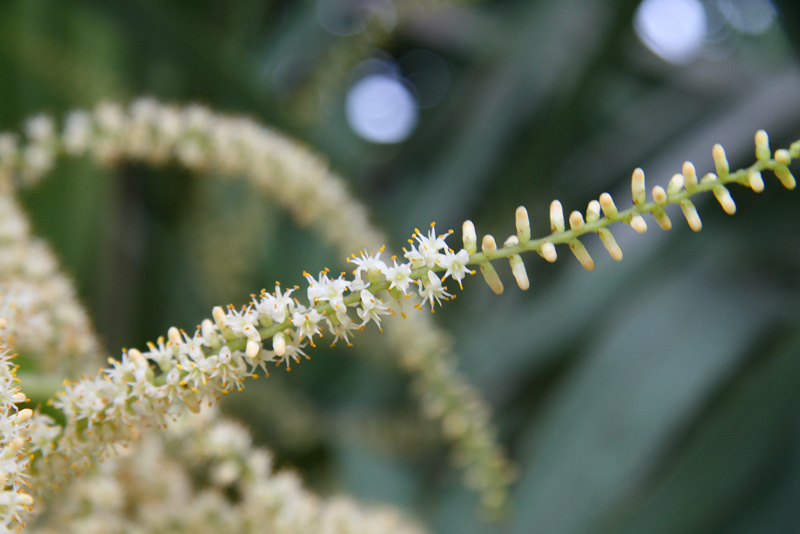
The sweet scent of saw palmetto (Serenoa repens) especially perfumes the evening and early morning in our yard and wherever it grows. Saw palmetto blooms from April through July.
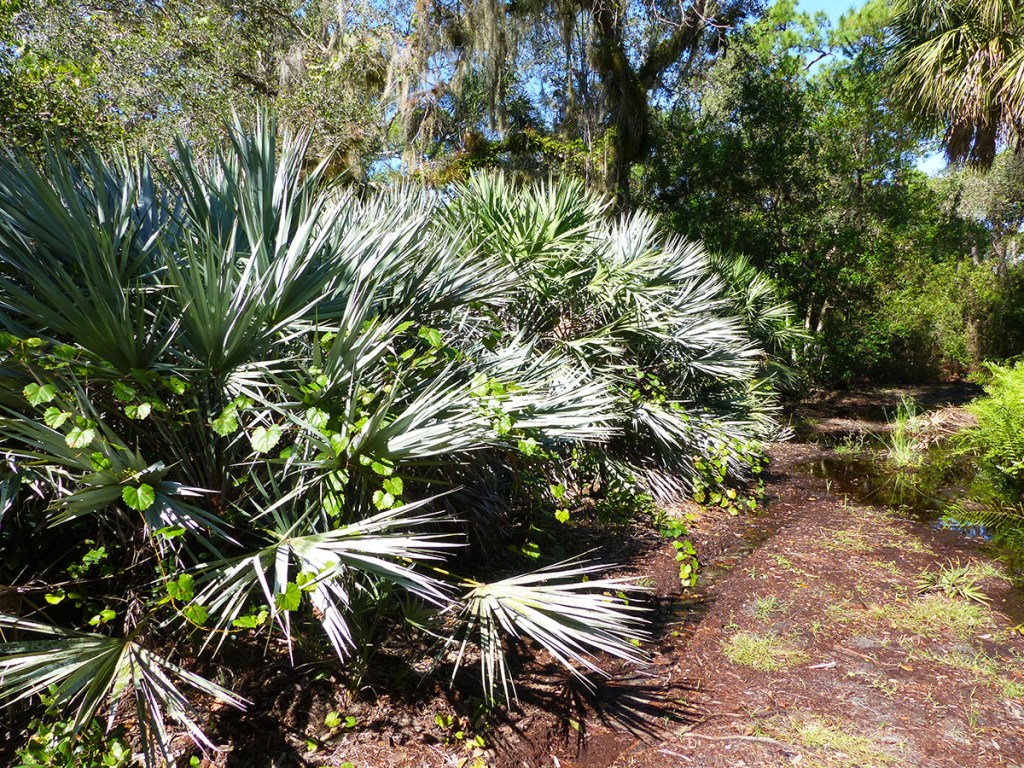
This ubiquitous palm grows throughout the entire state of Florida and westward to southeast Louisiana and northward to southern South Carolina. It is endemic to (only found in) the United States and is shown below along the trail at the Oslo Riverfront Conservation Area.
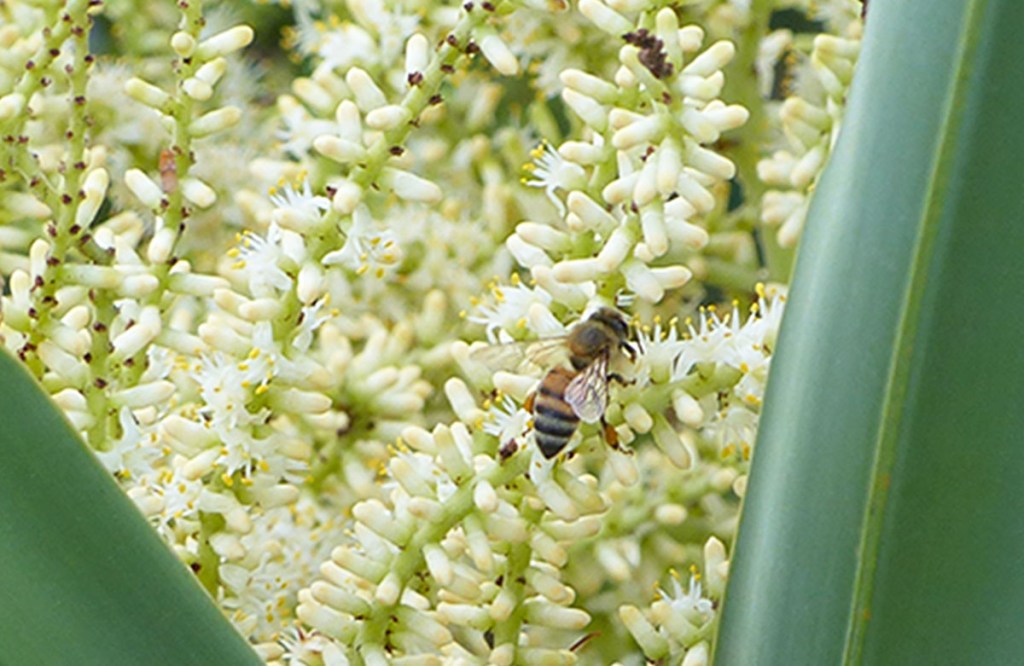
Dr. Marc Deyrup documented 311 species of insects visiting saw palmetto flowers at Archbold Biological Research Station. 121 of these insects belonged to the Hymenoptera family (bees & wasps), 117 to the Diptera family (flies including mosquitoes & love bugs), and 52 were in Coleoptera family (beetles).
Of these 311 insects, about 69% are predators looking to score a meal (or, perhaps, looking for a potential mate). Other creatures, like the Cuban brown anole (Anolis sagrei) shown below, also are lured to saw palmetto flowers in search of something to eat.


Love bugs find saw palmetto flowers to be very attractive but are unlikely to be effective pollinators. Bees, both the native bees co-evolved with saw palmetto and European honeybees (Apis mellifera), are the primary pollinators of saw palmetto.
Flowers that have been pollinated ripen into a single seeded fruit (drupe). The fruits, when ripe, are glossy and dark black …
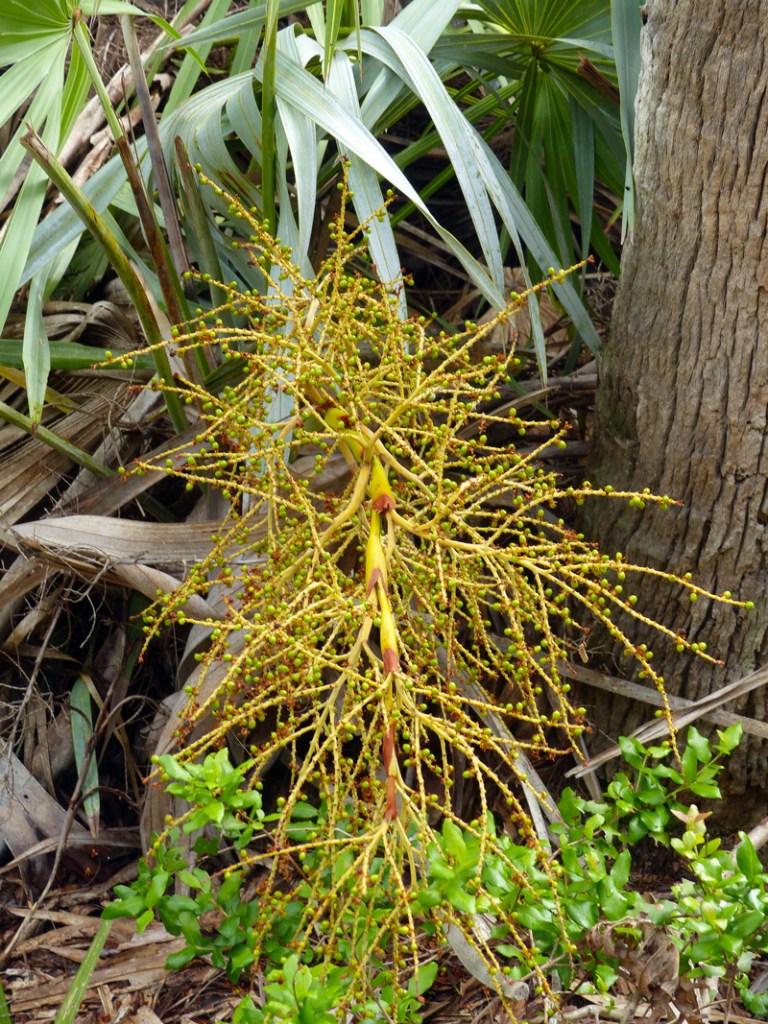
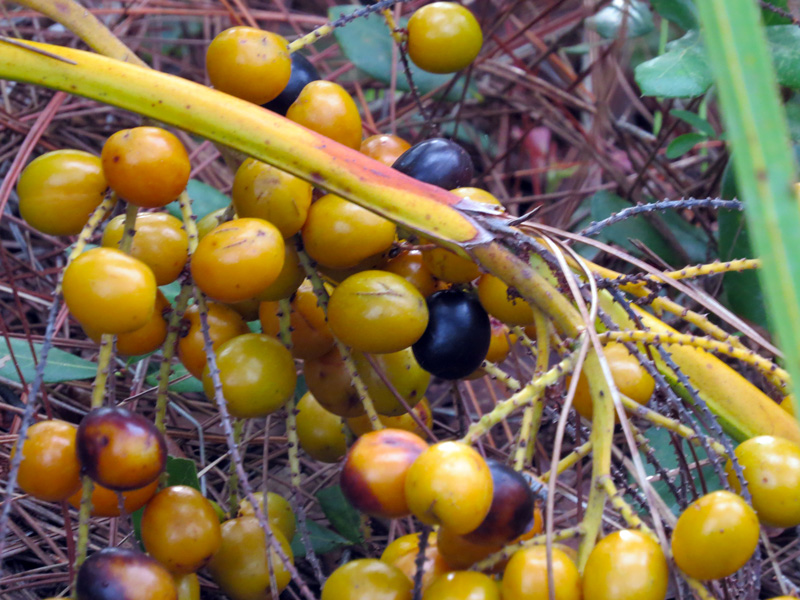
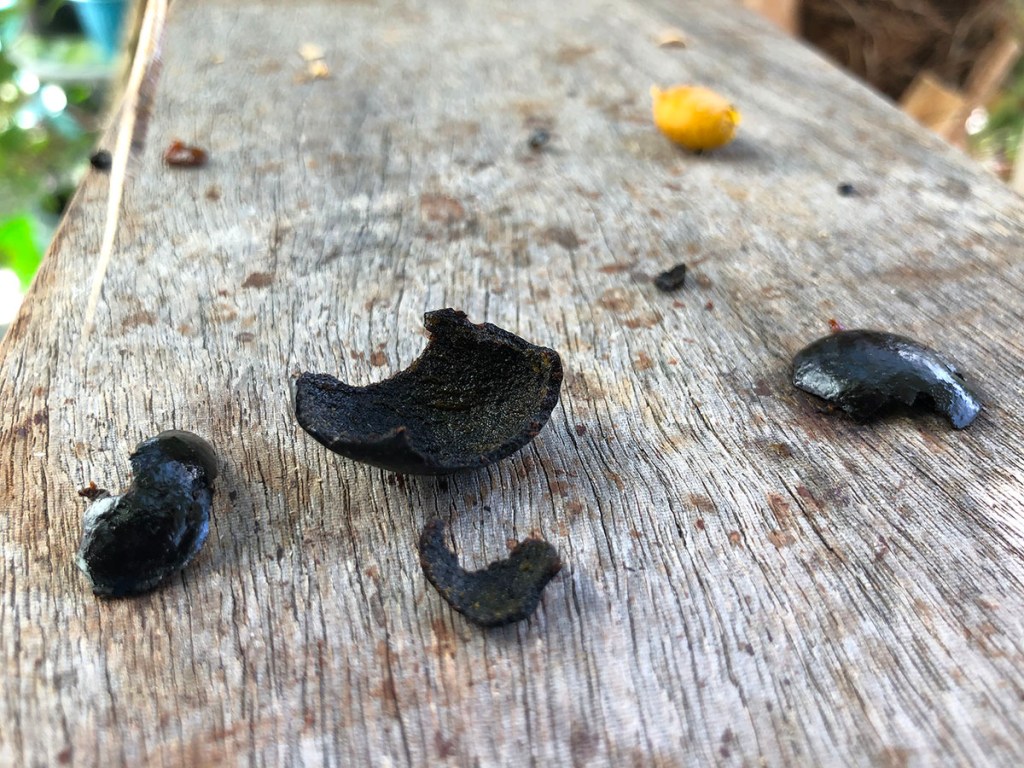
These high-fat fruits are consumed by a plethora of critters Including black bears, deer, raccoon, turkey, fox, and even gopher tortoise. Shown below on our home deck railing is a fruit that has been “enjoyed” by a squirrel. Enjoy nature in your own yard ad whoever you can!
 Enjoy the Oslo Riverfront Conservation Area