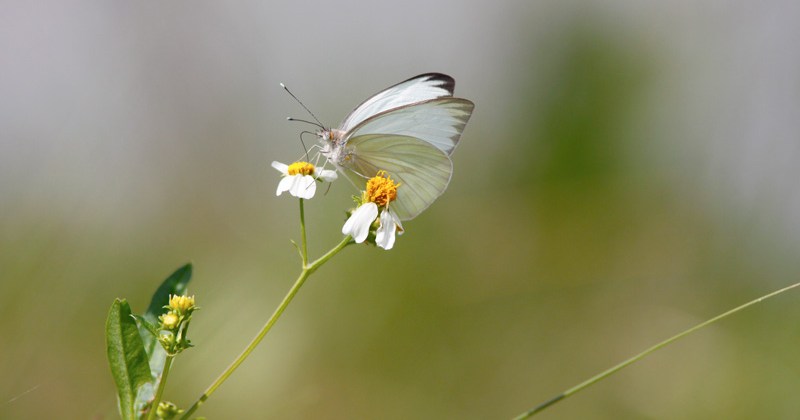

Folks sometimes think that monarch butterflies as the only butterflies that migrate. Though their migration distance is not nearly as dramatic as that of monarchs, great southern white butterflies (Ascia monuste) sometimes migrate from 20 to 40 miles in two days or less.
These tropical butterflies are found in the southeastern U.S., the West Indies, Mexico, Central America, and South America. In Florida, they migrate to the north in the spring/summer and to the south in the winter. Once upon a time, huge numbers of these beautiful “snowy” butterflies migrated along the east coast of Florida, but, as with so many creatures, habitat loss, pesticide use, and other human influences have dramatically diminished their numbers. Click here to see video of a dramatic number of great southern white butterflies migrating in thee Cayman Islands.
Pictured below is a great southern white butterfly nectaring on seagrape (Coccoloba uvifera) in our yard …

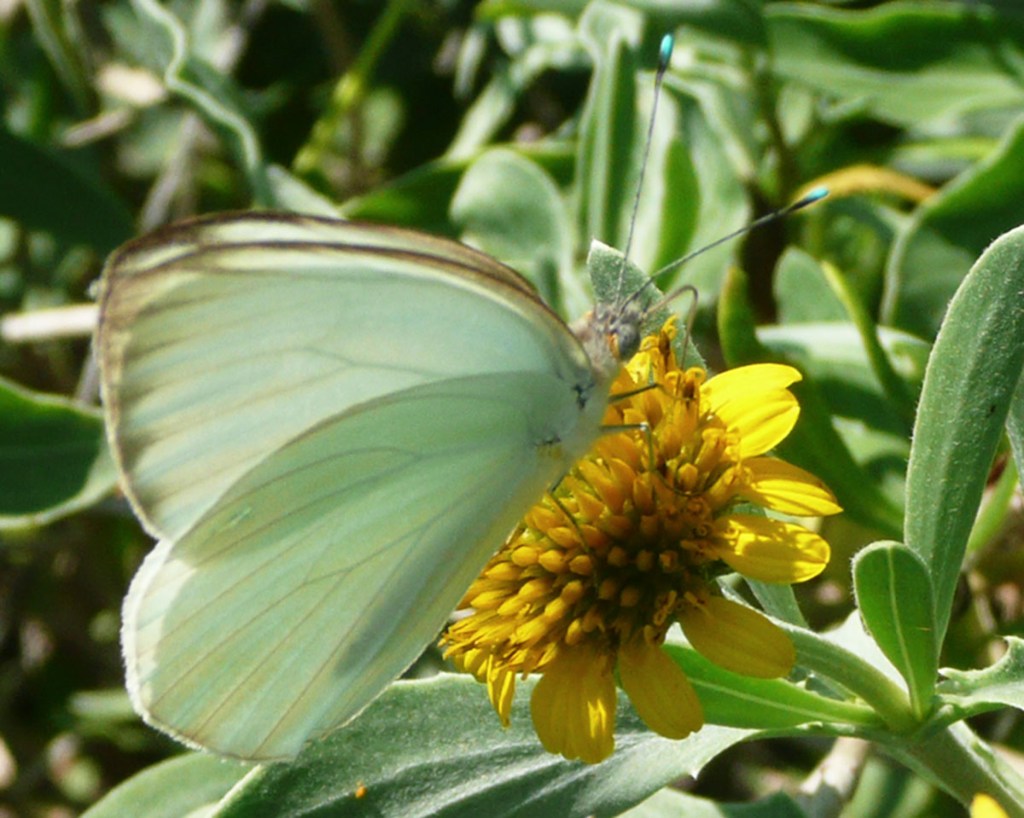
Note the distinctive turquoise “clubs” on the ends of the antennae. Female butterflies are grayish white to gray in color and live 8 to 10 days. The females tend to be darker in color in the fall.

Male butterflies live about 5 days and are whitish in color with a black zigzag pattern on the outer margin of their forewings.
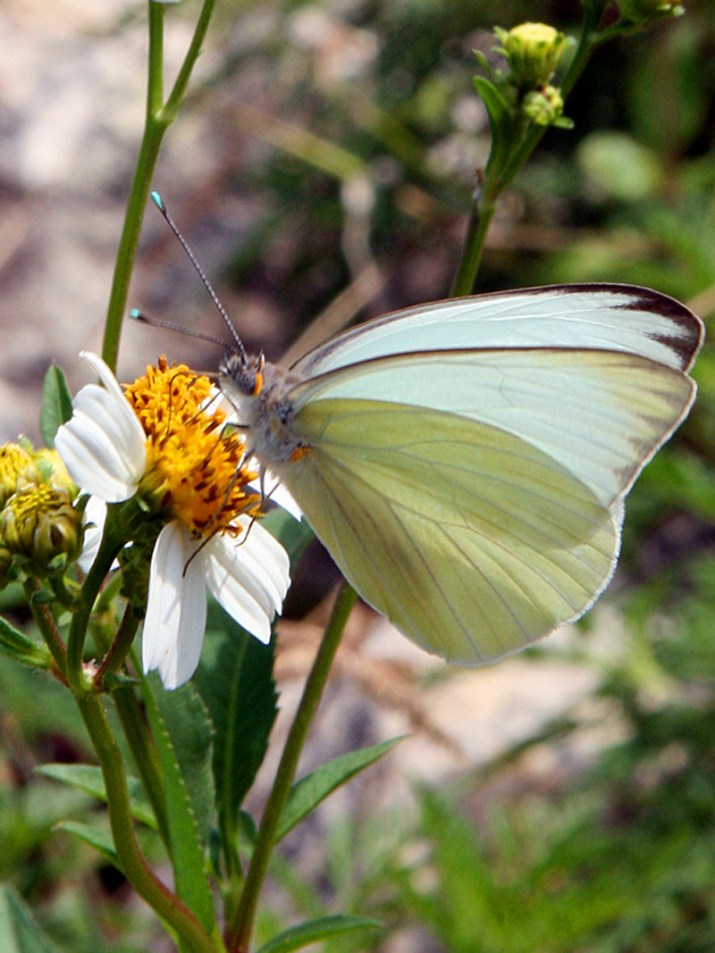
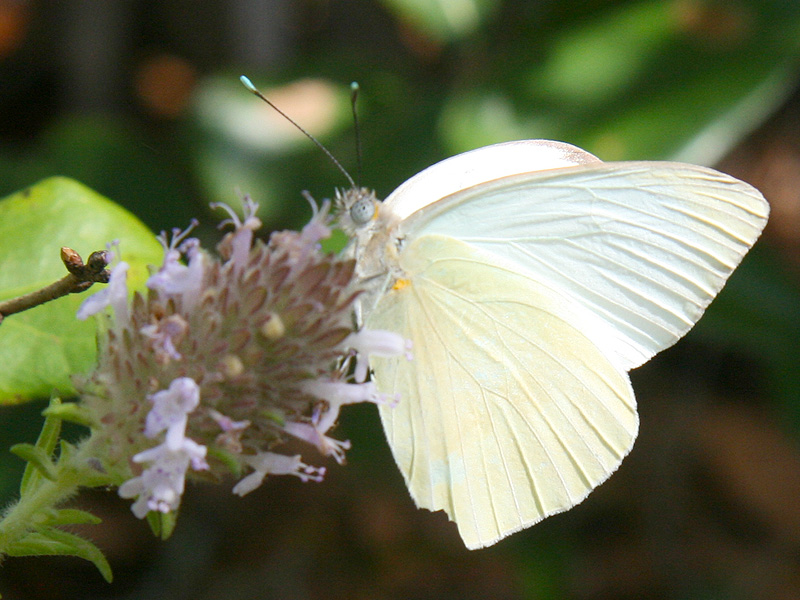
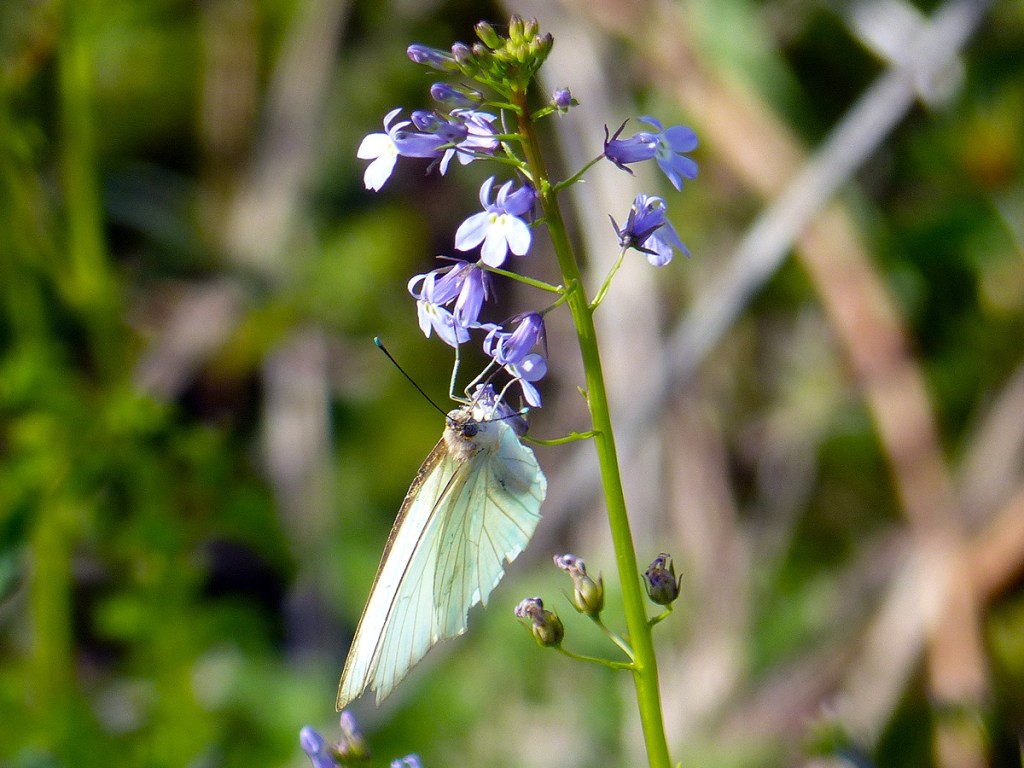
You will frequently see this butterfly in sunny coastal places along roadsides, as well when visiting our conservation lands. Common beggarticks (Bidens alba) is a favored nectar plant, but this butterfly nectars on a wide range of plants including wild pennyroyal (Pilobelphis rigida), bay lobelia (Lobelia feayana), turkey tangle fog fruit (Phyla nodiflora), and Virginia pepperweed (Lepidium virginianum) …
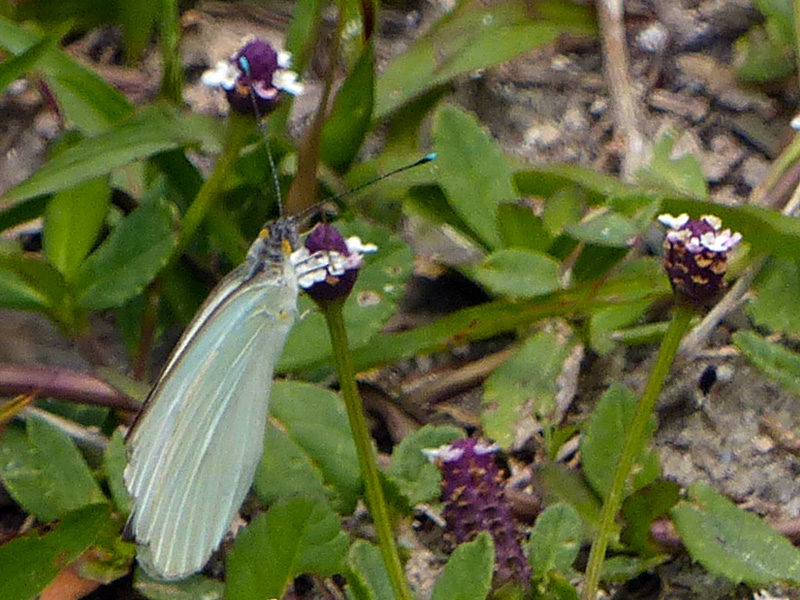

The salt marsh succulent saltwort (Batis maritima) is said to be the preferred host plant for this coastal butterfly. it also sometimes uses Virginia pepperweed, coastal searocket (Cakile lanceolata), and limber caper (Cyophalia flexuosa).
Look for this migratory butterfly flying northward and nectaring on a variety of plants including the native sea oxeye daisy (Borrichia frutescens) and the invasive and ridiculously ubiquitous pest largeflower Mexico clover (Richard grandiflora) …

Enjoy watching for butterflies – migratory and resident!
 Enjoy the Oslo Riverfront Conservation Area