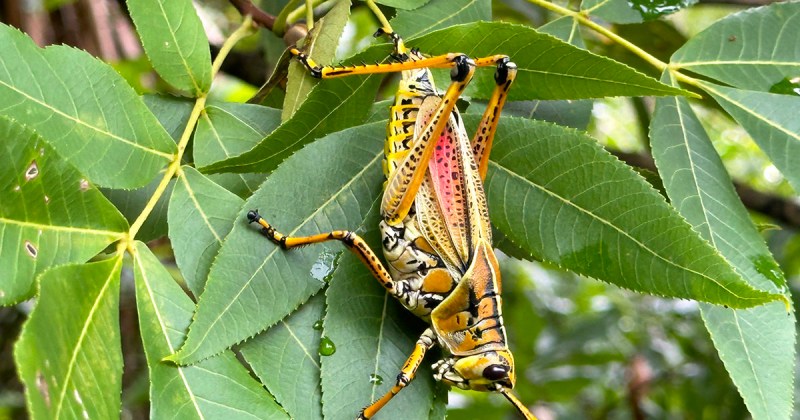

When we visited the South Prong Slough on 6-23-24 on a walk led by Friends of the St. Sebastian River President Tim Glover, we saw lots of eastern lubber grasshoppers (Romalea microptera) on a variety of plants including water hickory (Carya aquatica) shown above. Native to the southeastern U.S., lubbers stand out due to their bright coloration and substantial size. Female lubbers can be more than 3″ long, and males are a bit smaller.
Time of year also explains their prevalence. Their population peaks in July and August in Florida. Females lay their eggs in the ground and are “guarded” by males during oviposition (egg-laying). It takes 6 to 8 months for nymphs to emerge from the eggs, depending on temperature.
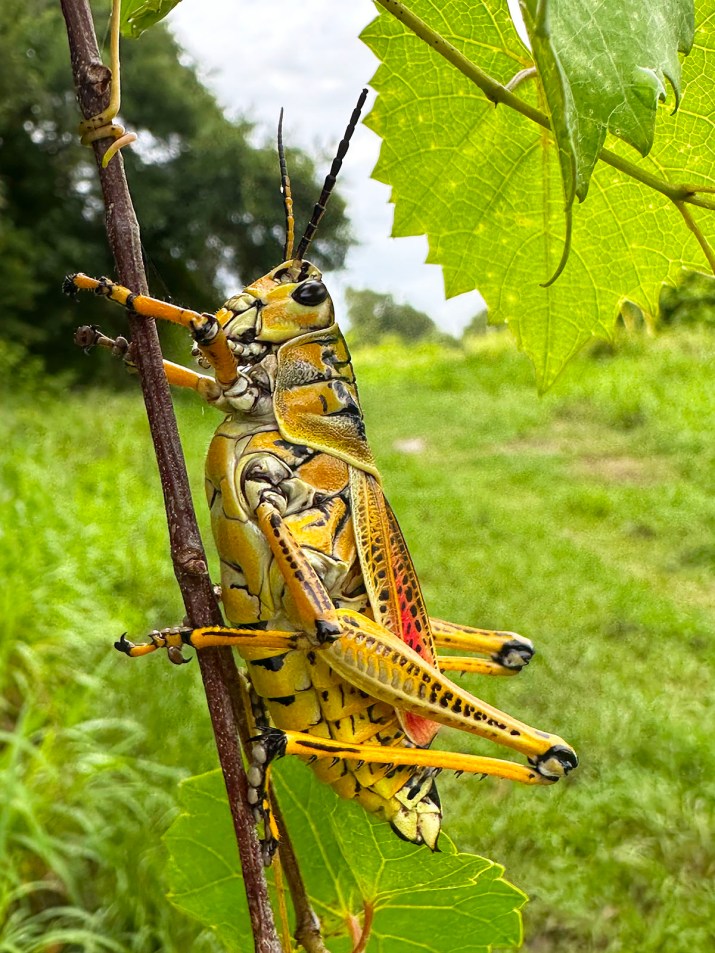
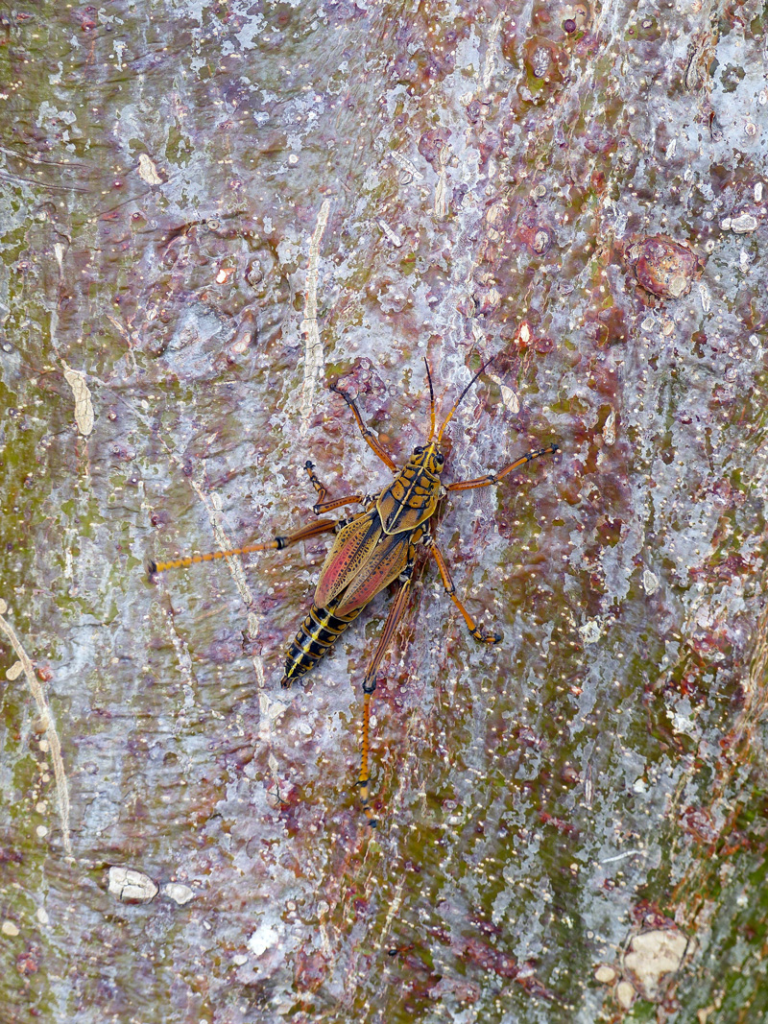
Their color is very variable with darker populations in the Northern part of Florida. Usually, adults are yellow or tawny in color with black markings.
Pictured below is a lubber color-coordinating with the bark of gumbo limbo (Bursera simarouba) …
Lubber are it clumsy and slow-mowing, but they are good climbers. By their sheer numbers, lubbers can damage citrus, vegetable crops, and ornamental landscape plants. The lubber above is feasting on common grapevine (Vitis rotundifolia). They prefer to feast on shrubs but also will consume vines and grasses.
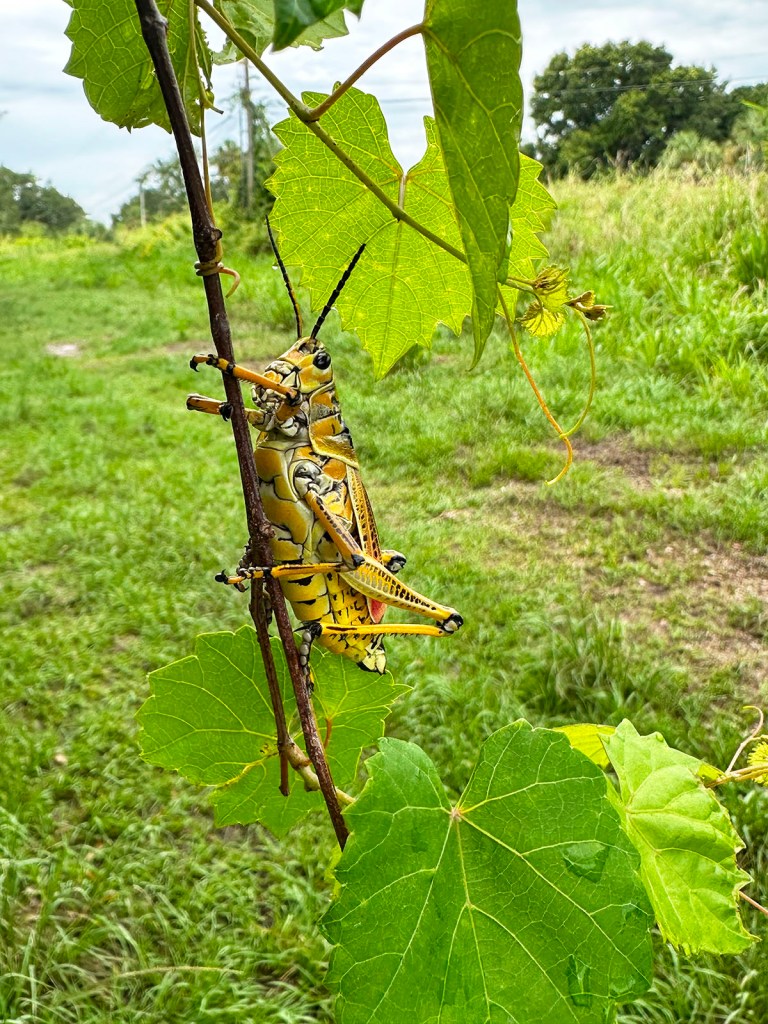
Lubbers sequester toxins from their diet, and, when molested, can emit a foul-smelling made from these toxins from their spiracles (breathing holes). This chemical defense can “spray” 5 inches.
Adult lubbers are difficult to control due to control with pesticides. Mechanical means are more effective. Click here to learn more about lubbers from the University of Florida Entomology Department.
 Enjoy the Oslo Riverfront Conservation Area