

Beautyberry (Callicarpa americana) is native to the southeastern U.S. and grows in every county In Florida. Its striking magenta fruits encircle its stems and give rise to its common name. The genus name, Callicarpa, means pretty fruits in Latin, and its species name, americana, refers to its natural range which is limited to North America.

Beautyberry is known to be a traditional biting insect repellent. Indigenous people reportedly rubbed the leaves on their skin to repel mosquitoes and ticks. Settlers were known to place beautberry leaves beneath their saddles. That historic use motivated researchers at the Agricultural Research Service in Oxford, Mississippi, to isolate two compounds with antibacterial and insect repellent properties from beautyberry: callicarpenal and intermedeol.
Concentrated pure extracts made from beautyberry leaves showed pest-deterring properties against mosquitoes, black-legged ticks, deer flies, and fire ants. But, callicarpenal was 21% less effective than DEET, the “gold standard”, and its repellency lasted only for about an hour. Other natural compounds have shown greater efficacy, so don’t expect to see the commercialization of these extracts.
You will find lots of DIY (do-it-youreslf) beatyberry mosquito repellent recipes online. Some recommend boiling the leaves, but these compounds are not thought to be water soluable. The pure extracts tested for repellency were extracted using alcohol, so recipes that recommend soaking crushed leaves in alcohol (or with hazel) may be more effective.
Even if you don’t use beautyberry as a repellent, it makes an excellent landscape plant with its dramatic magenta fruits. Fruiting occurs in the late summer and fall. Their taste is pretty insipid, but beautyberry jelly is yummy, a testimony to the power of pectin and sugar.The tiny fruits are consumed by seed-eating birds, armadillos, foxes, opossums, raccoons, and squirrels. — eventually. Fruits often persist into winter and are consumed when few other options are available.
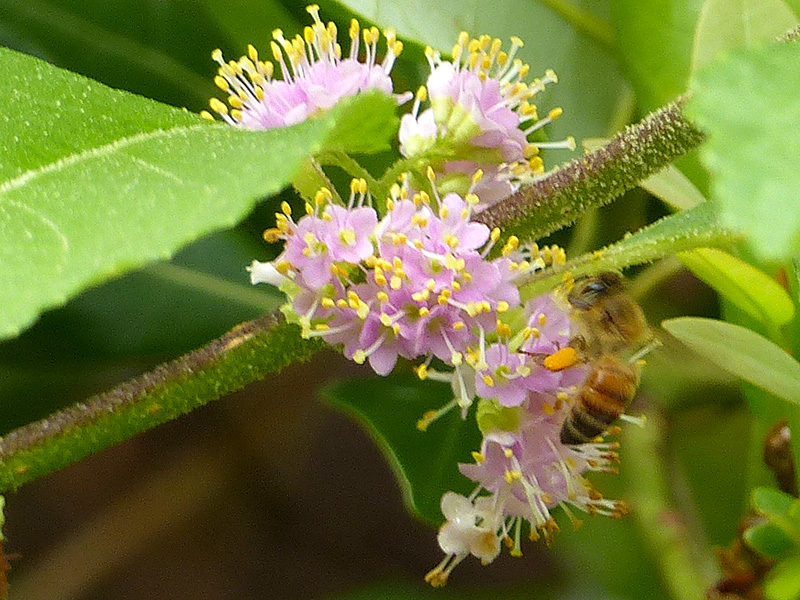
Flowering occurs in the spring and summer. The flowers are not nearly as showy as the berries. Nonetheless, the pinkish – white flowers held in the leaf axils (angles) attract pollinators including European honeybees (Apis mellifera).
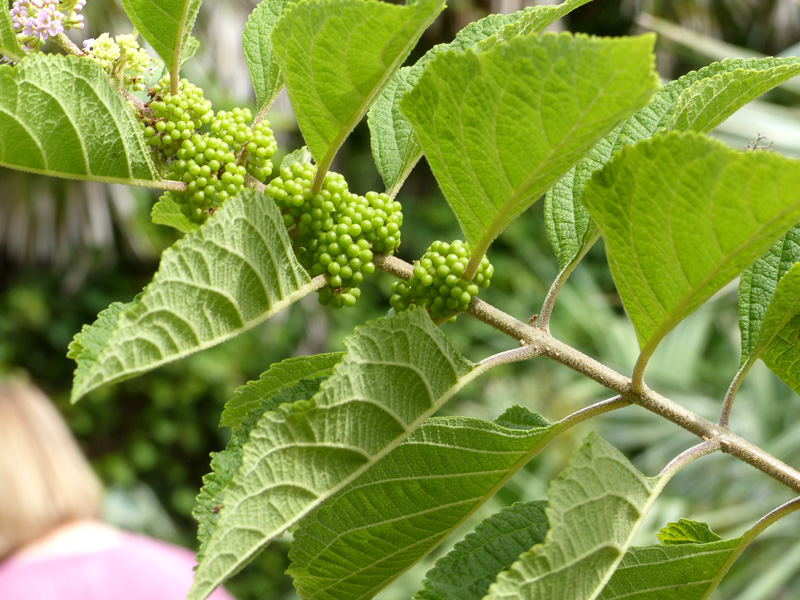
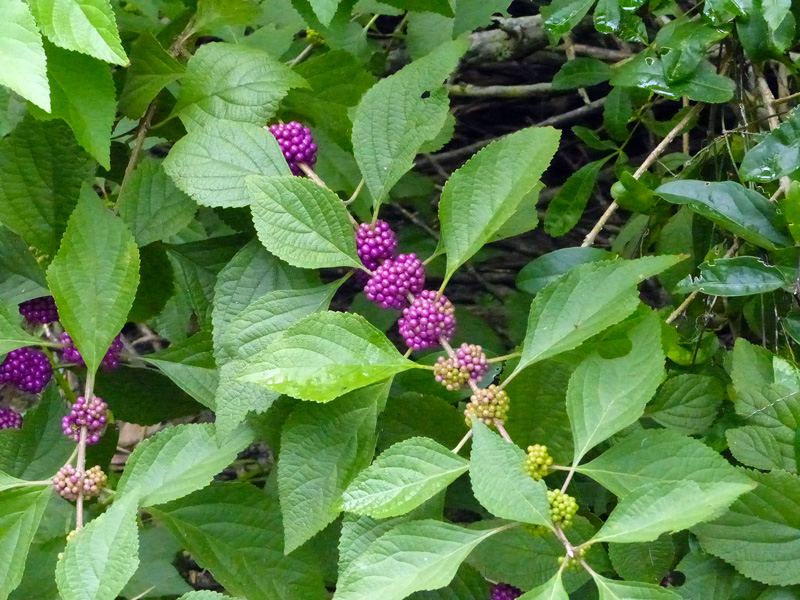
It is the coarsely textured leaves that have insect repellent properties. The alternate leaves have toothed edges, are from 3 – 6″ long. and have wooly, whitish hairs on the underside.
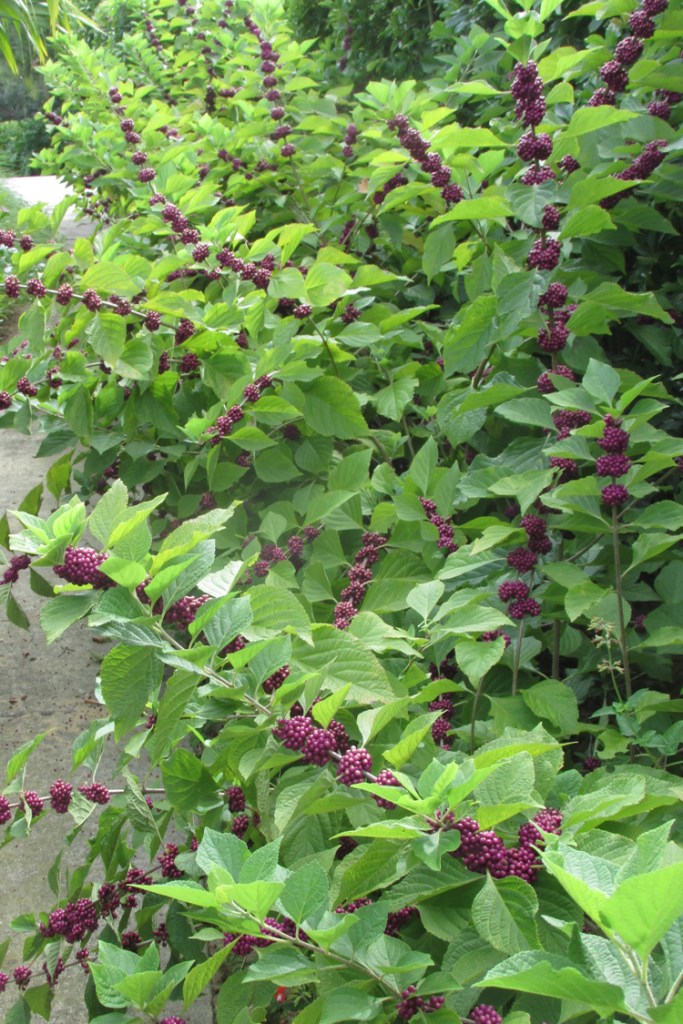
With a graceful sprawling habit and abundant long-lasting magenta fruits, beautyberry may not make the very best mosquito repellant, but it can make an attractive landscape addition that thrives in full sun or partial shade and is drought-tolerant.
 Enjoy the Oslo Riverfront Conservation Area