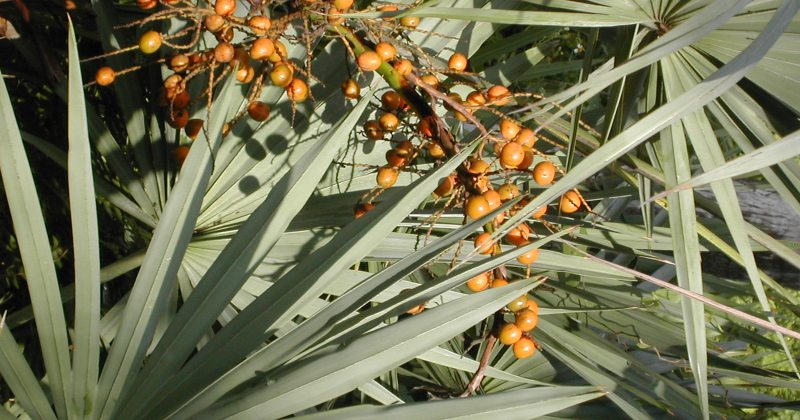

The fruit of saw palmetto (Serenoa repens) is often called a berry. Technically, it is a drupe, a fruit with a single seed that is enclosed within a hard shell and is surrounded by a fleshy outer layer. Think peach, plum or cherry.
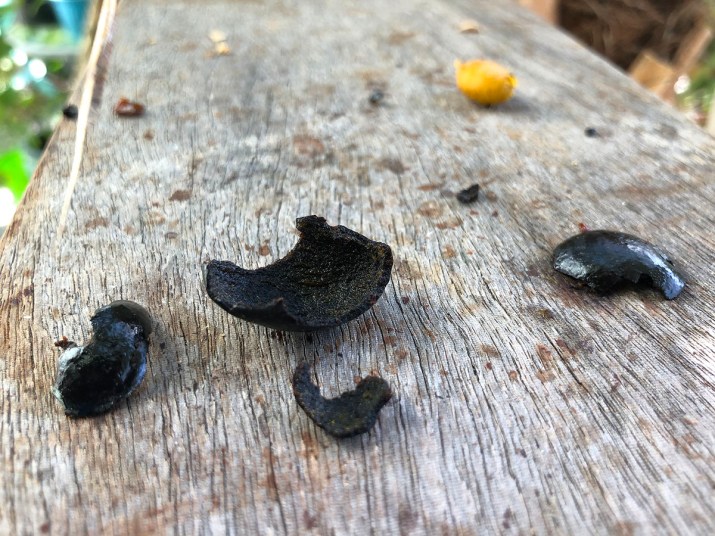
A drupe has 3 parts.The exocarp is the thin outer skin, shown below in the foreground. The mesocarp is the fleshy edible part, likely consumed by a squirrel in this case on our deck railing. The endocarp is the hard, stony inner layer, often referred to as a pit or stone and shown in the background.
Wildlife – from big black bears to birds that peck at the fruits – feast upon these drupes. White-tailed deer, raccoons, opossums, rodents, gopher tortoises, feral hogs, and gray foxes are among the critters that feed upon these fat-laden fruits.
Bees pollinate the tiny, fragrant flowers of saw palmetto. The fruits are tiny at first …

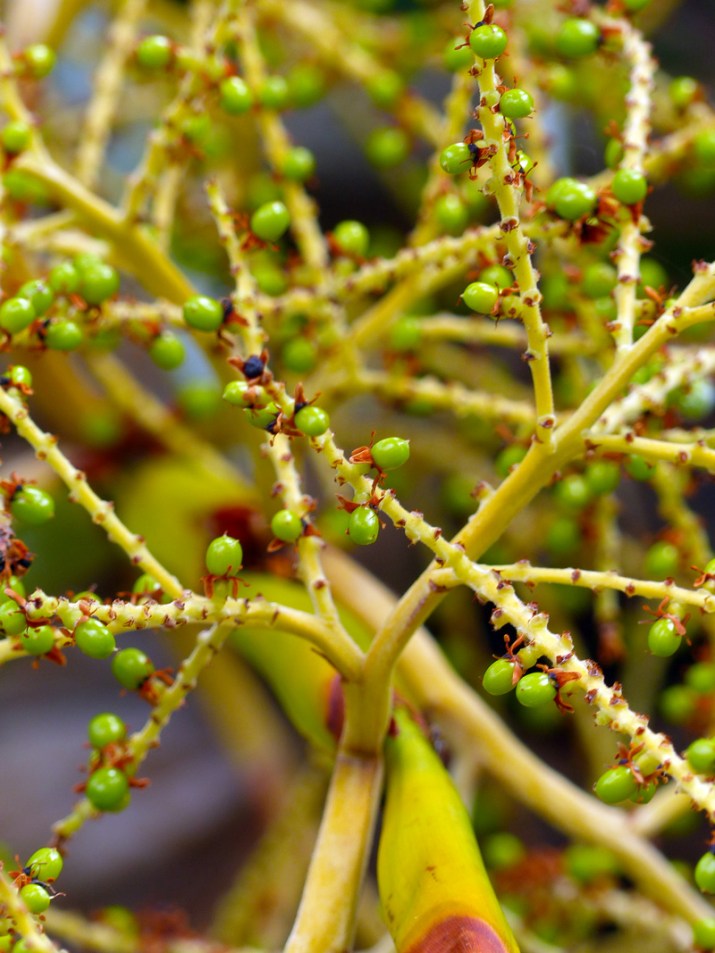
They ripen from green to gold to orange to blue black when fully ripe. Individual fruits ripen at different times since each flower is pollinated at a different time. Thousands of flowers are on each inflorescence, and the flowers ripen from the top of the inforescnce to the bottom.
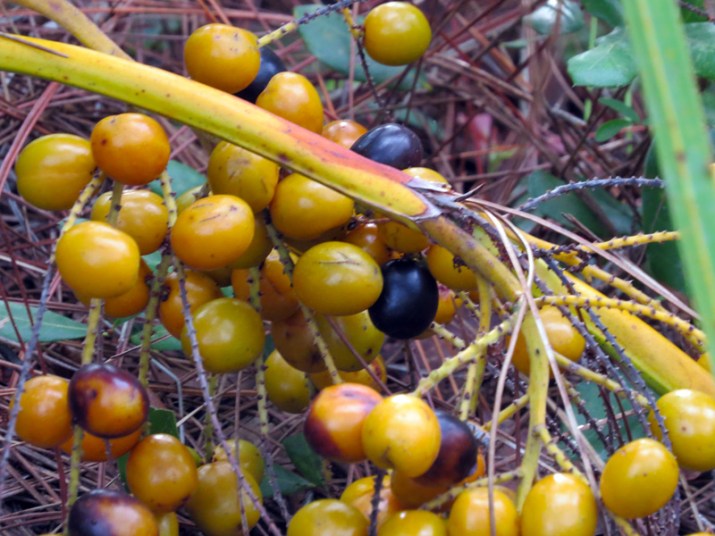
Saw palmetto fruits are harvested, often illegally from conservation lands and private properties, and sold for medicinal use to treat benign prostatic hyperplasia and lower urinary tract symptoms. In the fall when the fruits are ripening, you sometimes will see roadside signs advertising the purchase of bolitas, a.k.a saw palmetto drupes. As result of significant illegal harvesting, the state of Florida began to regulate this industry in 2018 through the Florida Department of Agriculture and Consumer Services.
In 2025 researchers from the University of Florida published a scientific paper titled Saw palmetto fruit from diverse geographical locations, ecotypes and developmental stages exhibit differential fatty acid accumulation in the Journal of Agriculture and Food Research. They found that:
- “Saw palmetto fruit extract consists of a complex mixture of bioactive compounds including fatty acids (FAs) (70–95%)”
- “Saw palmetto berries from southern regions of FL had higher fatty acid accumulation.”
- “Silver form berries had longer development, larger size, and higher fatty acid content.”
- “The optimal harvest period corresponding to the highest FA accumulation was at yellow/orange fruit ripening stage, which occurred 3 weeks prior to fruits turning black.”

Why do the fruits of silver saw palmettos grow bigger and contain more fatty acids than the fruits of green saw palmettos (which sometimes grow right next to one another)? Could it be that the epicuticular wax on silver saw palmettos provides extra protection from desiccating winds and sunshine?
 Enjoy the Oslo Riverfront Conservation Area