

Baybean (Canavalia rosea) is 1 of the 2 vines that grow on the font of beach dunes almost always toward the ocean. This vine grows swiftly and sometimes is said to be the inspiration for the Jack-in-the-Beanstalk story. Hence, it also is called seaside Jackbean. Beach pea and beach bean are other common names for this dune pioneer plant.
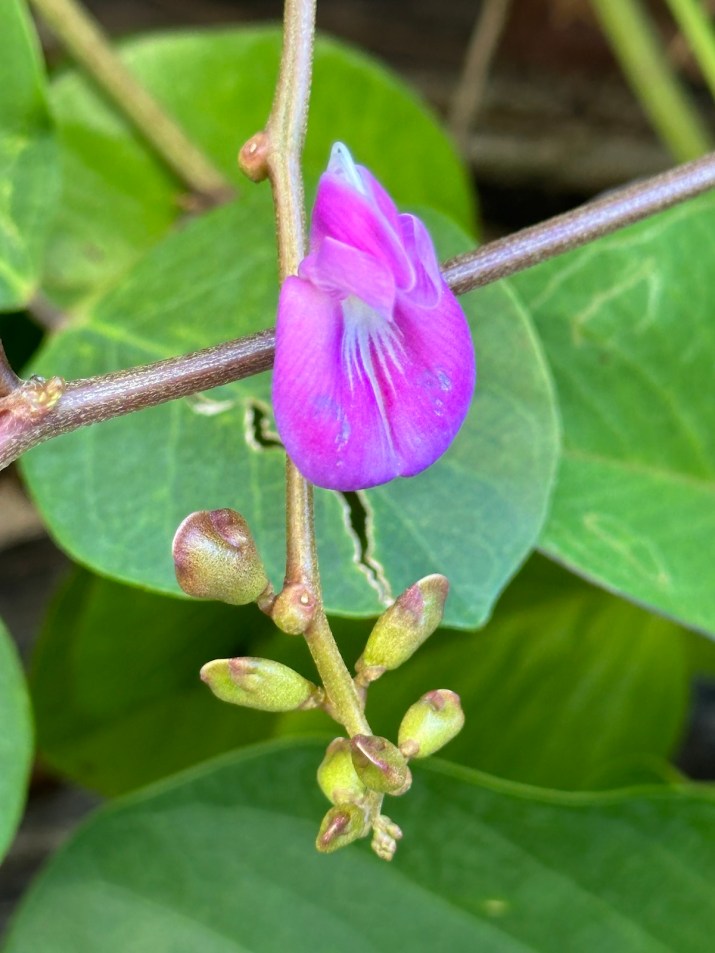
A member of the pea family (Fabaceae), its “sweet pea” type flower is purplish in color – sometimes bright and sometimes pale …

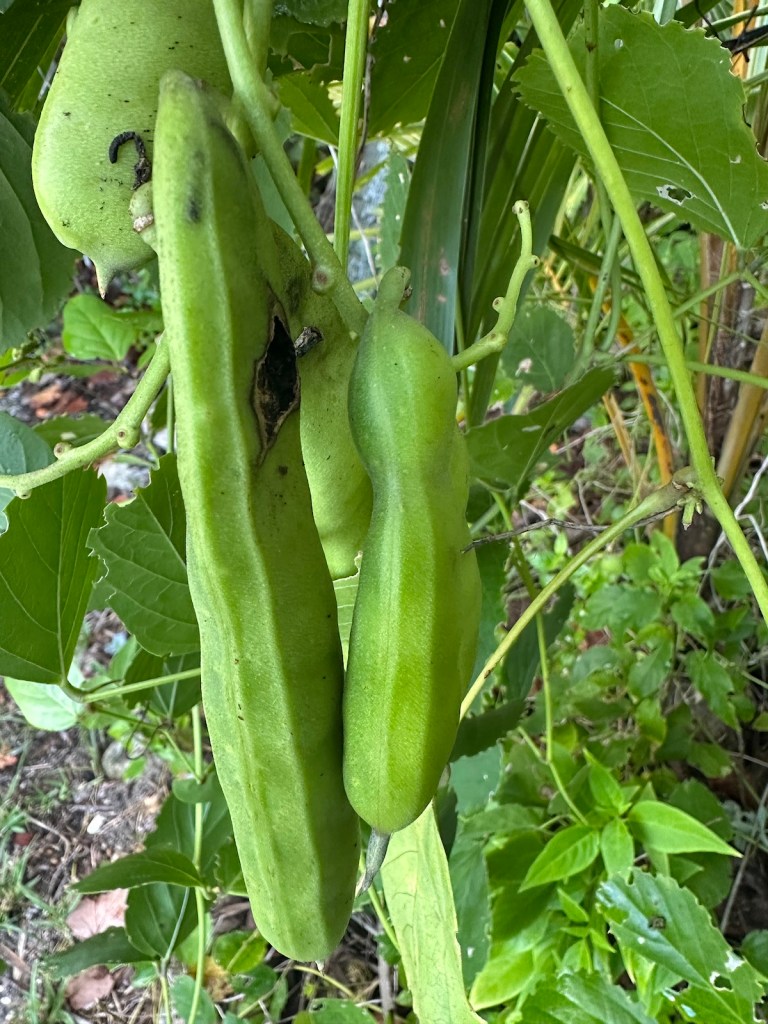
Its seed pods are 4 – 6″ long, thick, and ripen from green to dark brown …

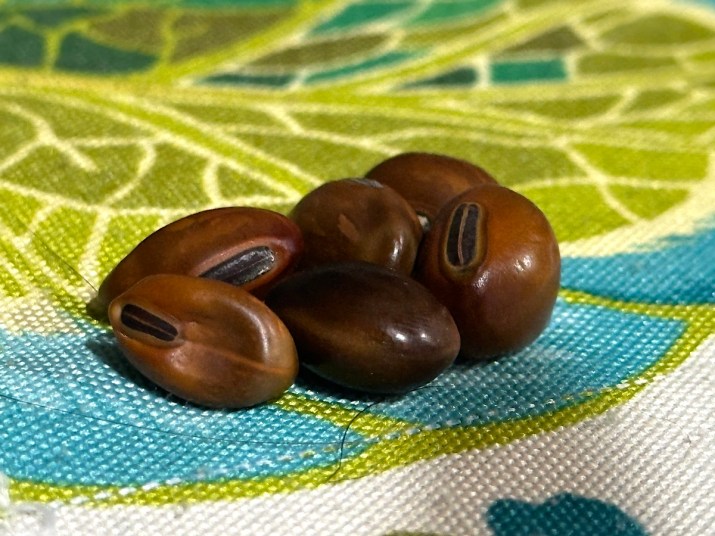
They split length-wise to release brown, shiny seeds. Note the conspicuous hilium, the mark left on the seed coat where the seed attached to its pod, a characteristic of plants in the pea family (Fabaceae) …
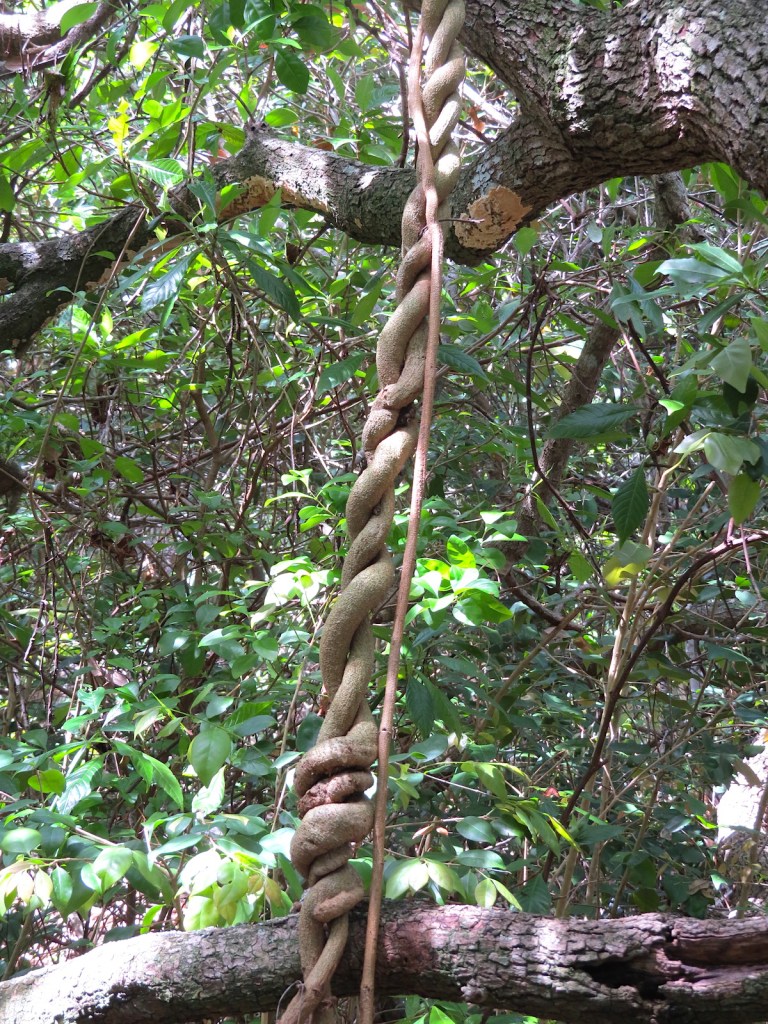
This fast-growing vine is perennial and long-lived. Over time it develops a distinctive twisted structure, as shown below in the hammock area at the Brevard Barrier Island Sanctuary and Education Center growing toward the sun through the branches of live oaks (Quercus virginiana) on a walk in 2014 led by Karen Schuster (Class of 2009) …

It can be distinguished from railroad vine (Ipomoea pes-caprae) by its “sweet pea” shaped flowers (versus funnel-shaped) and its trifoliate compound foliage …

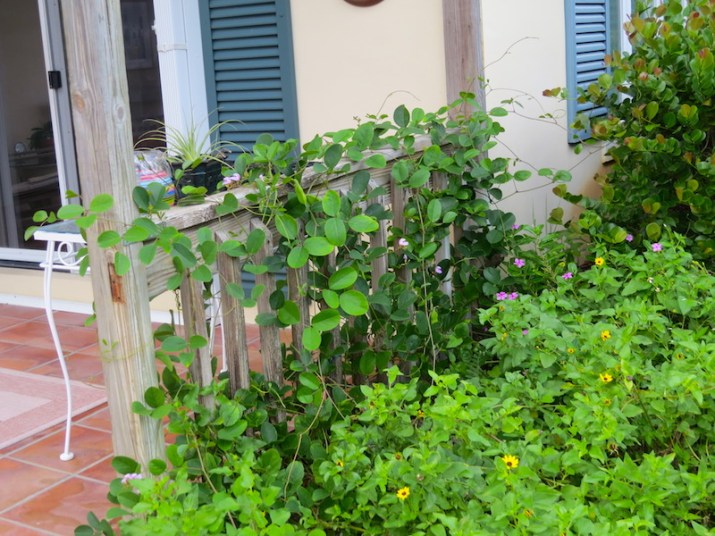
Consider using this salt and drought-tolerant vine in sunny locations in your landscape (alone or along with railroad vine) for … It is shown below gracing a railing in the landscape of Martha Willoughby (Class of Fall 1998) along with other beach plants including beach dune sunflower (Helianthus debilis) and cocoplum (Chrysobalanus icaco) …
 Enjoy the Oslo Riverfront Conservation Area