

Sweetscent (Pluchea odorata) is a native wildflower of moist places (brackish or fresh) that has a variety of other common names including camphorweed, stinkweed, salt marsh fleabane, sourbush, and cattle-tongue. Many of its common names refer to the sweet-spicey-musky fragrance emitted by the leaves when crushed. Pioneers used dried aromatic leaves to repel fleas and other insects (i.e., a fleabane).
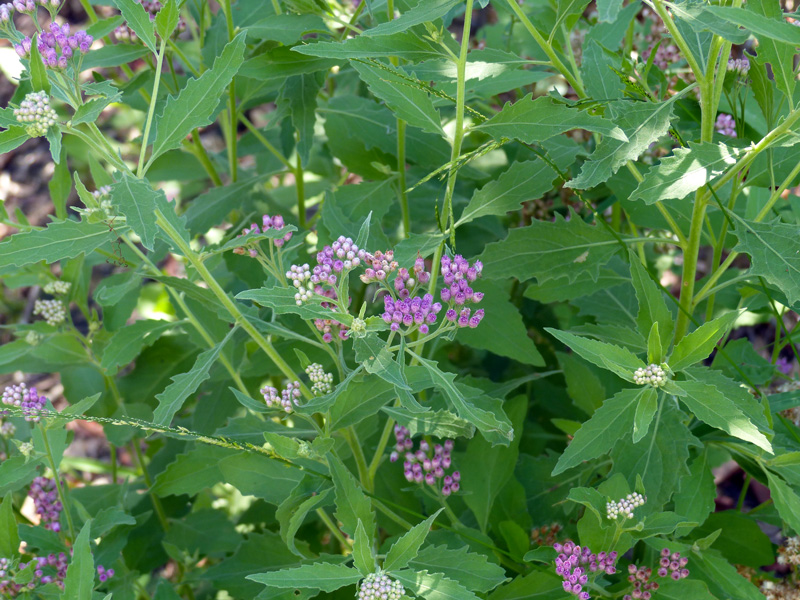
Its alternate leaves are rough to the touch, elliptical in shape, have toothed edges, and can be from 2 – 6″ long. The fragrant pinkish flowers are held in a flat topped cluster (cyme) and attract butterflies, skippers, and a wide variety of native bees including leaf cutter bees, sweat bees, and carpenter bees.
Flowering and fruiting occurs throughout the year in warmer parts of Florida. The fruit is an achene, a tiny, dry single-seeded structure that does not open (indehiscent) equipped with a tuft of hairs that facilitates dispersal (pappus). Sweetscent was full of flowers and fluffy fruits when we visited Jones Pier Conservation Area in May of 2023 and appears to be spreading


The common names camphorweed and stinkweed reference the ability of this plant to spread in sunny, moist places like the Jones Pier Conservation Area, where it was planted as part of restoration efforts.
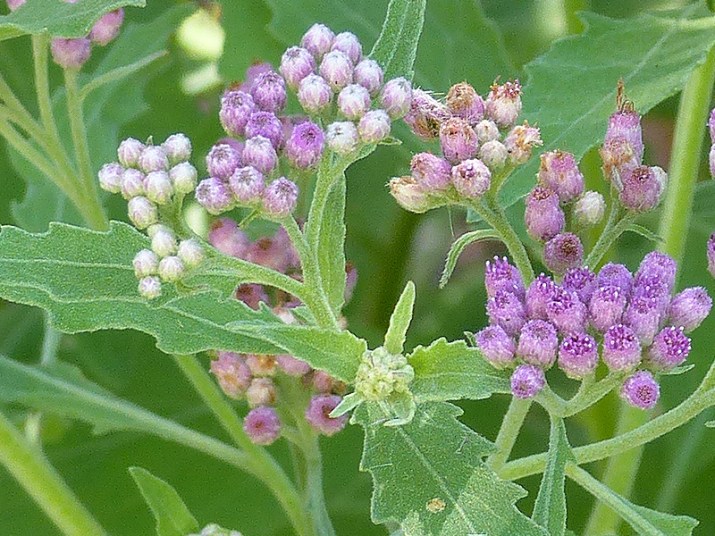
The June newsletter of the Marie Selby Botanical Garden, Sanctuary, features sweetscent for its beautiful blooms and notes that it “should be planted in moist full-sun areas but may quickly naturalize.” In Hawaii, sweetscent is an invasive pest plant. Its range includes brackish and freshwater marshes and coastal hammocks throughout most of the U.S., Mexico, the Caribbean, and Central and South America.
We have encountered sweetscent when we visited the Oslo Riverfront Conservation Area, the Toni Robinson Waterfront Trail, and the Fellsmere Trailhead Preserve. Enjoy this wonderful wildflower when you visit natural areas or add it to your yard (with caution).
 Enjoy the Oslo Riverfront Conservation Area