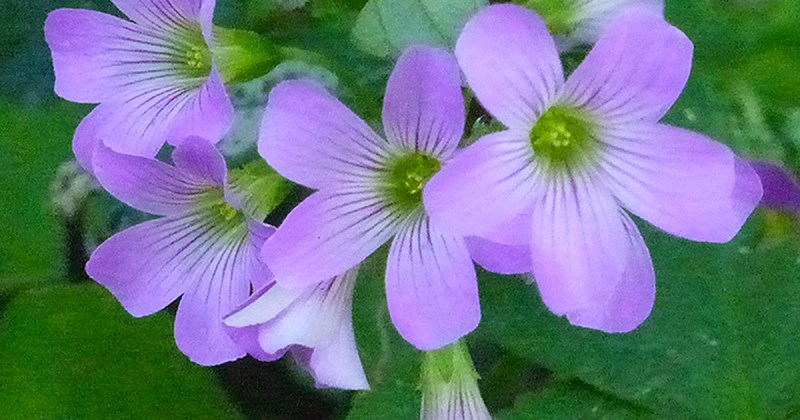

Pink woodsorrel (Oxalis debils var. corymbosa), a non-native perennial wildflower, seems to come and go around here (but not everywhere). Over the years, we have seen it growing in the shade at the entrance to the Oslo Riverfront Conservation Area and more recently on the edges of a shady moist hammock at the Coastal Oaks Preserve. According to the Center for Regional Conservation, pink woodsorrel is “sparingly naturalized” in many south Florida conservation areas.
This pretty plant with pinkish or lavender flowers hails from South America and was introduced to the U.S. as an ornamental plant. It has been present in Florida since 1930, and has been known to spread swiftly in northern Florida and elsewhere. It is now inhabiting every continent except for Antartica. Throughout the Pacific and Asia, it is regarded as invasive.
This plant spreads by rhizomes, as well as by small ovoid bulbs that can persist underground for years, and is capable of forming large colonies. Its compound leaves have 3 heart-shaped leaflets, giving rise the common name of false shamrock.
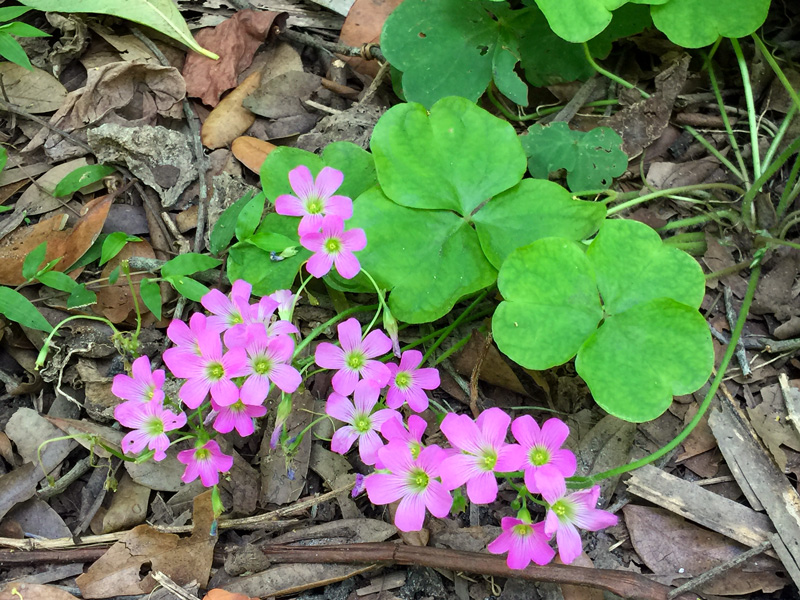
Its 5-petaled veined flowers are quite striking …
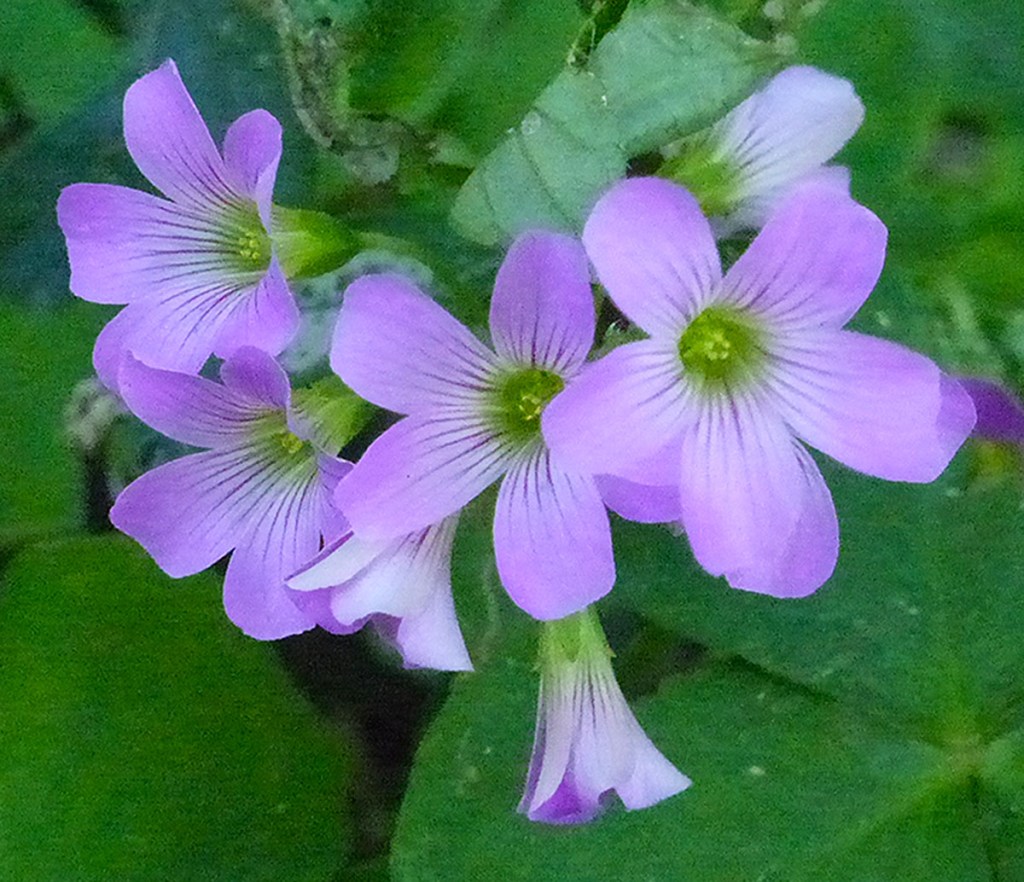
The flowers, leaves, and stems are edible and reportedly have a tart lemon-y flavor. The roots are said to have a nutty taste. All parts of the plant contain oxalic acid, as do spinach and broccoli. A pot may be the best place for this plant that can become weedy or even invasive in some locales.
 Enjoy the Oslo Riverfront Conservation Area