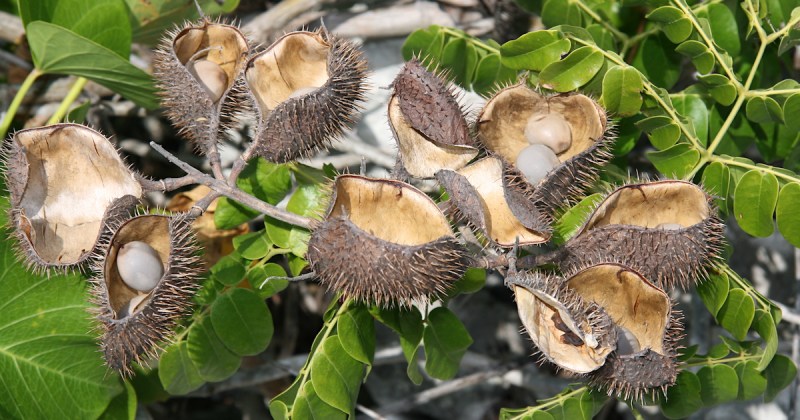

Seabean season is upon us. Seabeans, a.k.a, drift seeds, are seeds that float and are transported by river and ocean currents. Only 1% of all seeds have this floating ability. You can find seabeans throughout the year, but high seas and hurricanes bring more.
Some people collect shells, sea glass, or shark teeth; Other folks collect seabeans. Click here to visit the online seabean community.
Some seabeans are from tropical plants that only grow elsewhere. Other sea beans come from native plants, making it hard to discern if they’ve been “produced” in Florida or elsewhere.
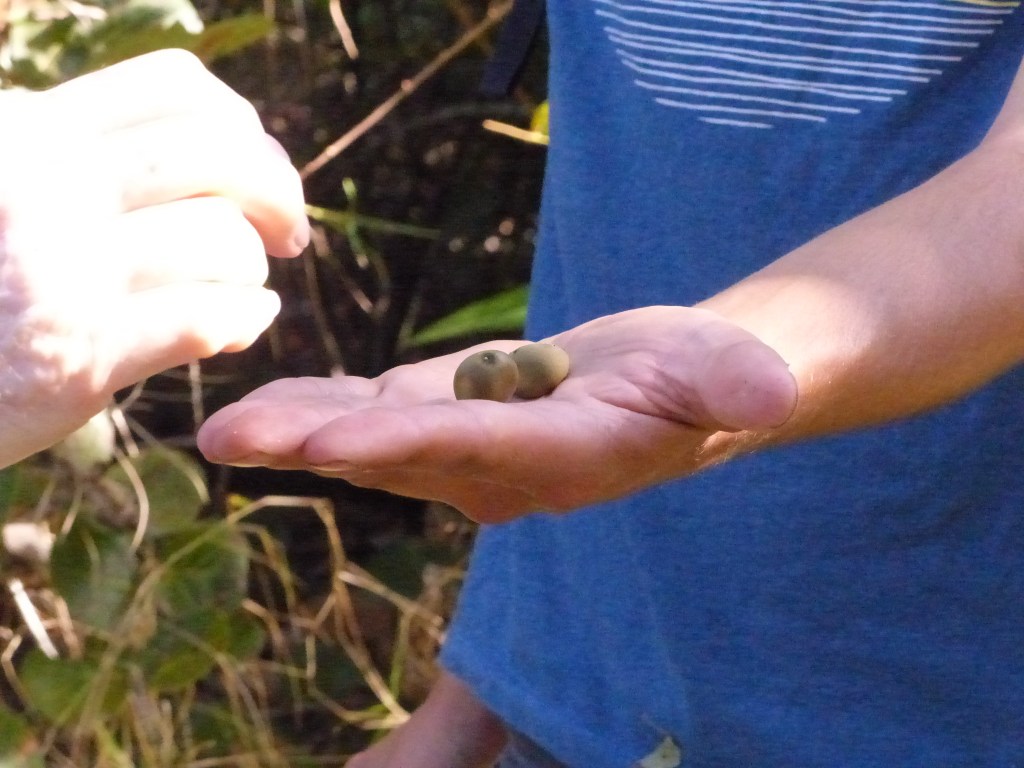
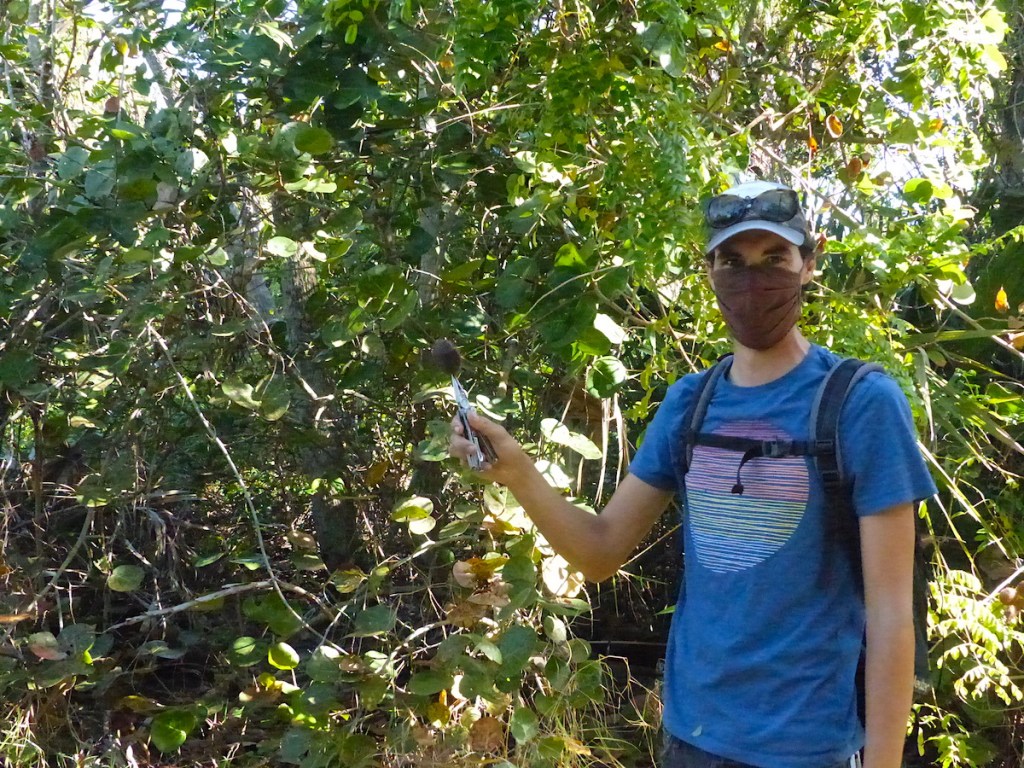
One Florida native plant that has seeds that float for long distances is gray nicker (Guilandina bonduc). Its seeds are grayish (usually), roundish, around an inch in diameter, and very hard. Environmental Learning Center Campus Manager Marc Spiess shows some nickernuts that he took out of a seed pod at Sebastian Inlet State Park Hammock Trail …
Its seed pods of this plant are well-armored, ripen from green to dark brown, and open length-wise during the heat of summer …
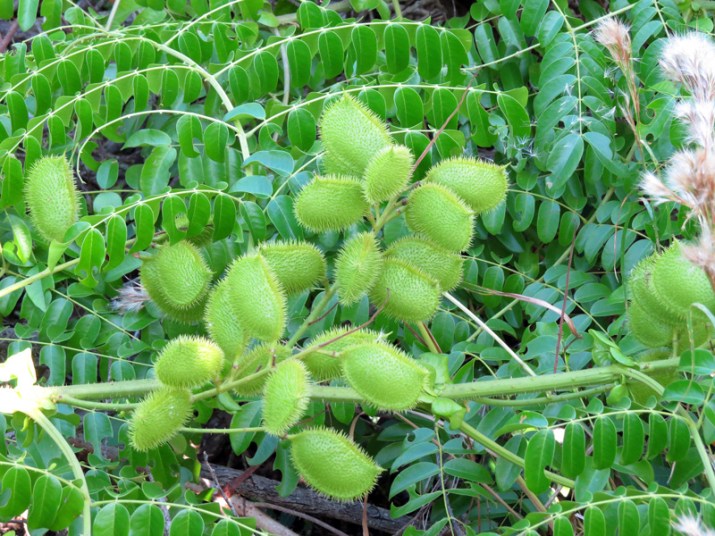
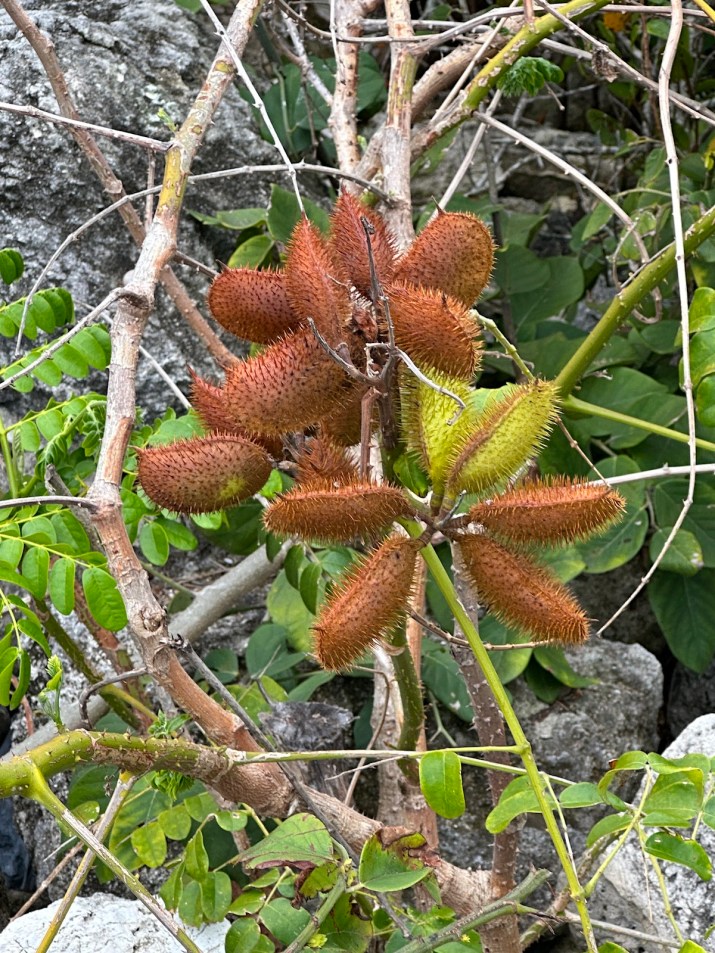
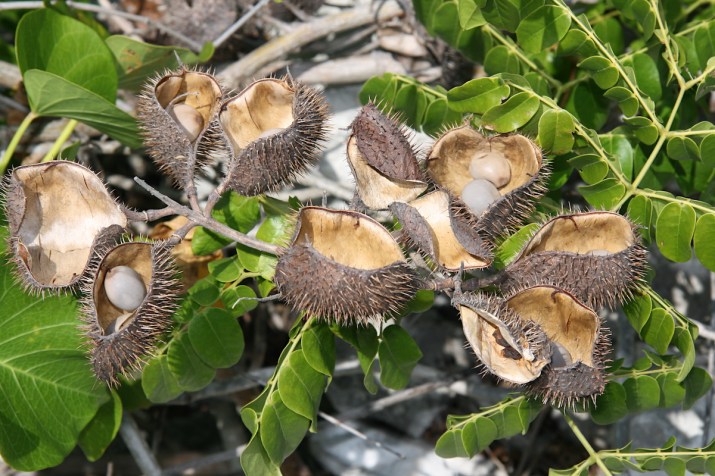
Its leaf stems are thorny, too …

A member of the pea family (Fabaceae), this thorny plant has striking yellow flowers …
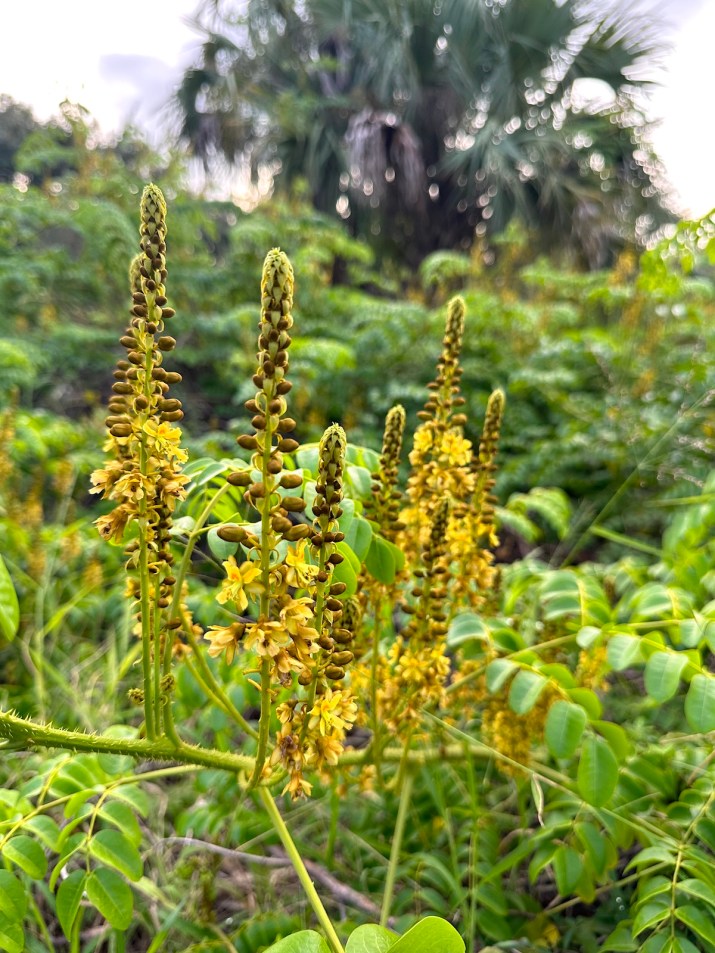
This vine/shrub often sprawls on itself, as shown at the south end of the bathroom parking lot area at Pelican National Wildlife Refuge …

The shape and color of its seeds can be quite variable, a you can see from the nickernuts that I’ve picked up on ether beach over many years …

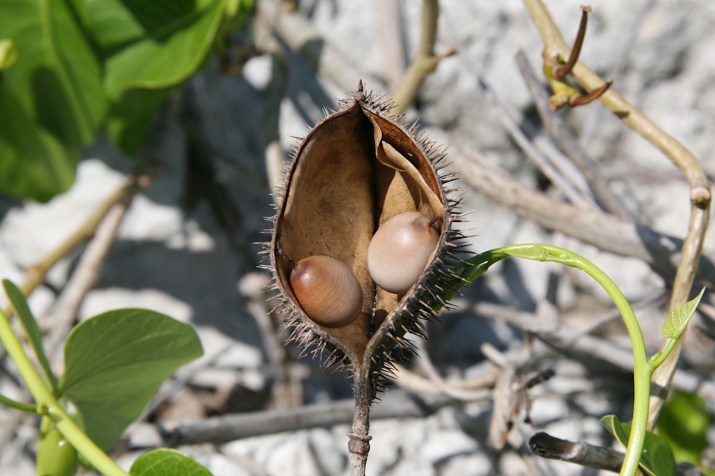
Each pod will contain 1 or 2 seeds. The photo above – with a brownish nickernut with conspicuous concentric curved lines and a grayish nickernut – was taken along the Recreation Path along Highway A1A just north of Pelican Island National Wildlife Refuge. So, there’s significant variability even within a seed pod.
Retired Sebastian Inlet State Park Ranger Ed Perry speaks of finding 50 nickernuts on the beach after a hurricane in the wonderful book that he co-authored, Sea-Beans from the Tropics: A Collector’s Guide to Sea-Beans and Other Tropical Drift on Atlantic Shores.This book is out of print, unfortunately, but sometimes is available from used booksellers.
Ed Perry also notes that nickernuts can float for more than 20 years and remain viable due to its hard, protective seed coat and an internal air bladder that aids in flotation. That is why these seabeans are found on beaches throughout the world. Ocean currents even carry them to the beaches of Europe.
Next time that you take a stroll on the beach be on the lookout for nickernuts.
 Enjoy the Oslo Riverfront Conservation Area