
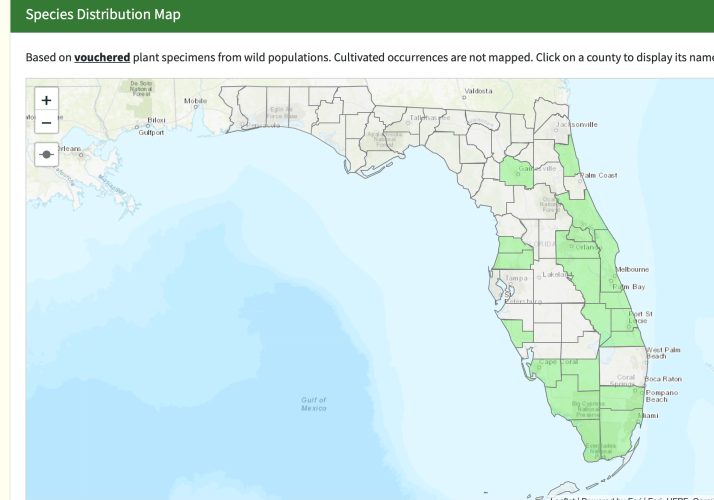
Simpsons stopper (Myrcianthes fragrans) fared fabulously during the February 2026 freeze. A look at the range map from the Florida Plant Atlas for this plant shows that it ranges as far north as Volusia County and has an inland distribution on the east coast of Florida.
Yet, this plant “acts” tropical. It often flowers and fruits throughout the year. Typically, it flowers in the early spring and fruits in the early summer. But, sometimes it will flower and fruit for a second time, most often re-flowering in late summer and fruiting again in the fall.
But, you never know. In February of 2018, the Simpsons stopper near the Boathouse at the Florida Medical Entomology Laboratory was full of fruits …
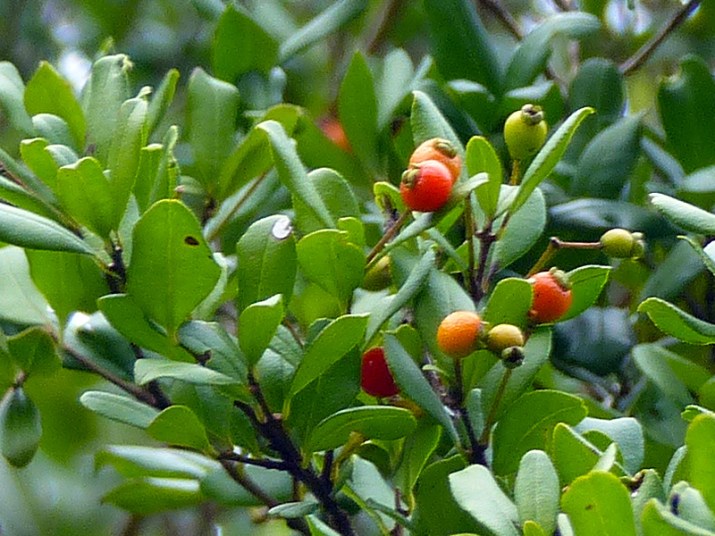
Its juicy fruits are borne in pairs, giving rise to the common name twinberry stopper and are bright red when ripe. Each fruits contains 1, 2, or sometimes 3 soft green seeds. These soft seeds that germinate quickly and have little dormancy, a characteristic of tropical plants.
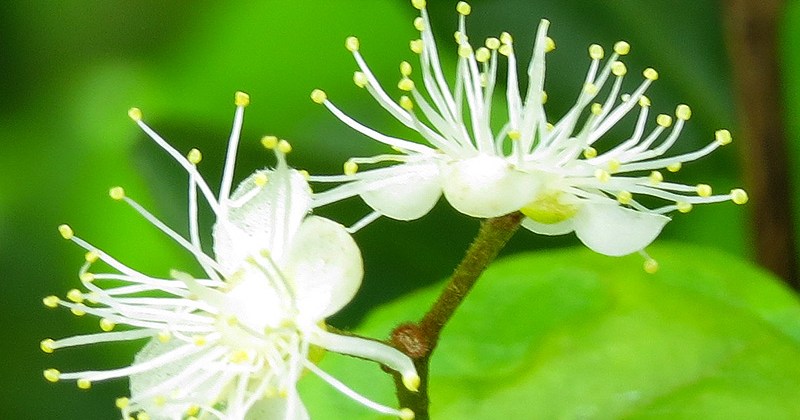
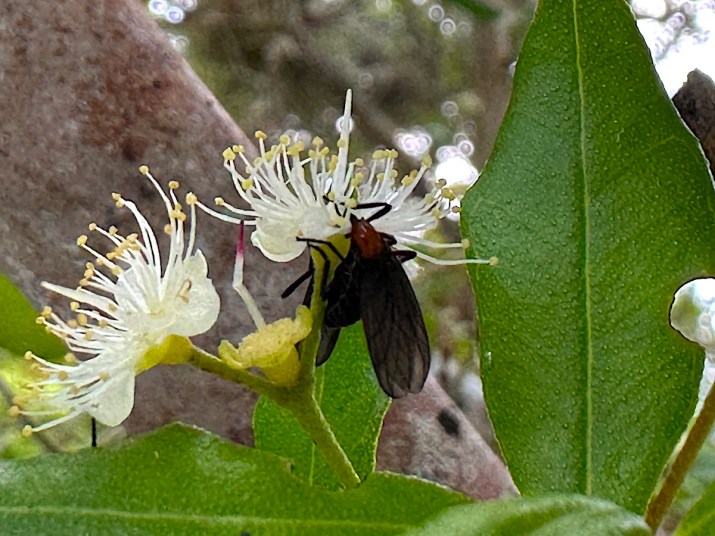
Simpsons stopper did not fruit during the frigid February of 2026. But, by late April and May, the stoppers throughout our County were full of fragrant, white flowers with multiple stamens, including at the Indian River Mosquito Control District …
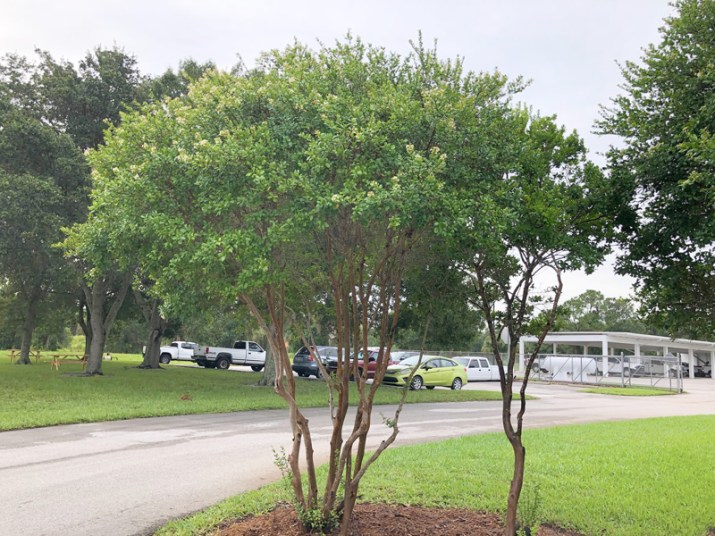
These stoppers have been part of the landscape for more than 50 years and always attract a bevy of pollinators. This year coastal areas of Indian River County experienced more lovebugs than “usual“. Lovebugs (Plecia nearctica), a non-native insect, emerge in the late April and May with a second emergence, usually less robust, in late August/September. Lovebugs love white flowers …
In full sun flowering and fruiting are prolific …
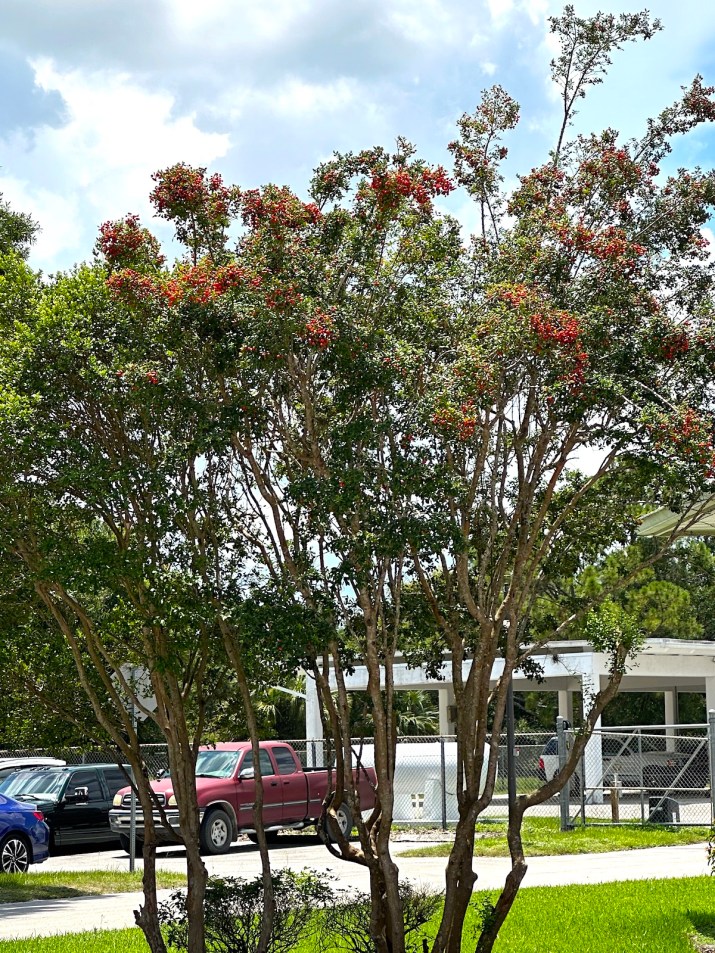
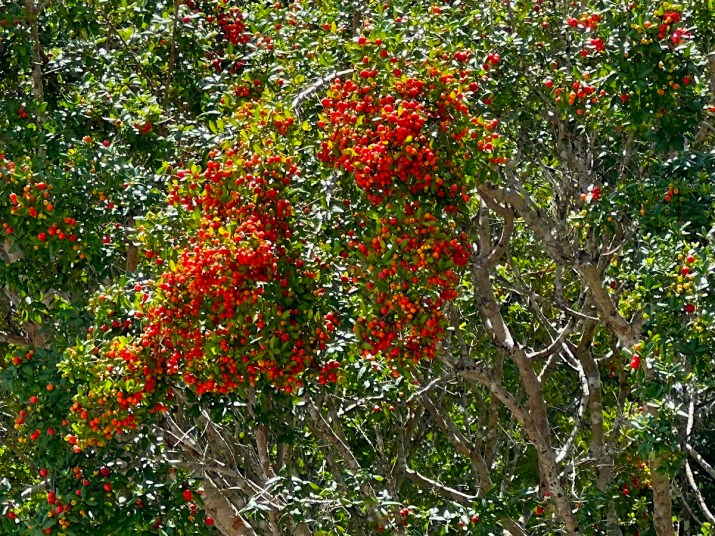
Look for this cold-hardy plant, fruiting now, in landscapes. Incorporate it your landscape to attract pollinators and feed birds and other wildlife.
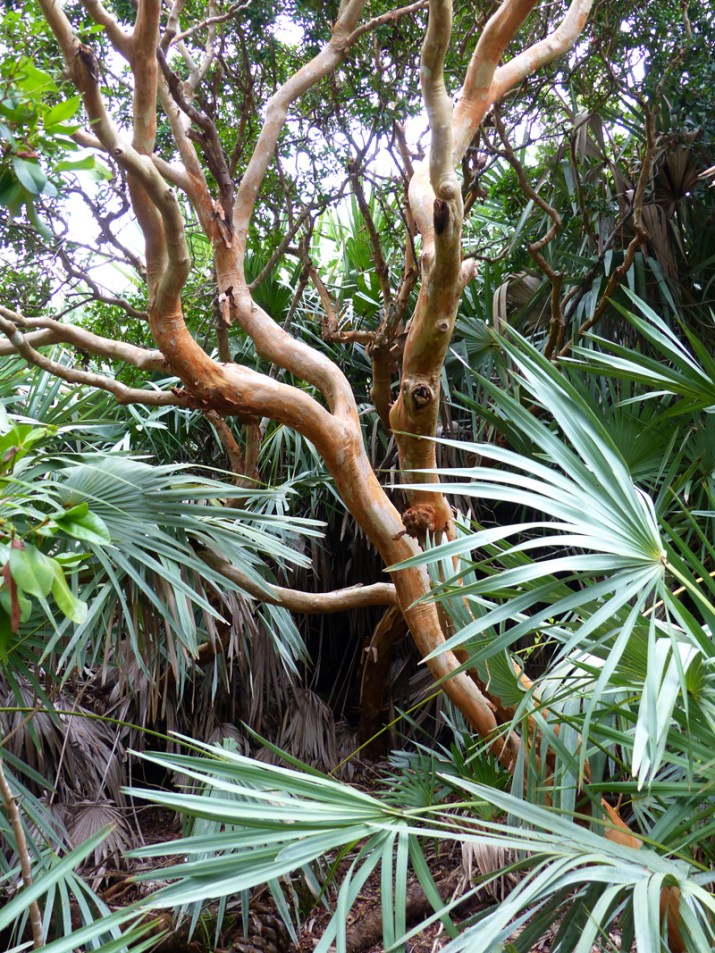
Also look for it in our natural areas including at Captain Forster Hammock Preserve, shown below, where very old specimens show why this plant also is known as nakedwood stopper.